

Concrete
hand finished in the USA

What Is a GFRC Sink?
GFRC stands for Glass Fiber Reinforced Concrete. It is a composite material made from portland cement, fine sand aggregates, and alkali-resistant glass fibers — with no steel rebar. The result is a concrete that is up to 75% lighter than solid poured concrete, far stronger in tension and impact resistance, and thin enough (3/8" wall thickness) to be formed into shapes that traditional concrete cannot achieve.
At Linkasink, every concrete sink is handcrafted from GFRC and hand-sealed with a 7-step sealer in Phoenix, AZ.
The Concrete sink process
-
![]()
1. Mold Prep
Each sink form begins with a precision mold, machined or cast to the exact specifications of that product model. Molds are prepared with release agents and inspected before each pour to ensure clean edges and consistent surface character.
-
![]()
2. Mix
Portland cement, fine silica aggregates, and alkali-resistant glass fibers are combined with water and admixtures. The fiber content is evenly distributed throughout the mix to create isotropic strength in all directions.
-
![]()
3. Hand Pack
The GFRC mixture is hand-packed into the mold in layers. This process requires skill and experience to achieve consistent density and prevent voids. Each sink is worked by hand, there is no automated process.
-
![]()
4. Cure
The packed sink cures for a minimum period of two weeks before demolding. Patience at this stage is what produces a structurally sound piece as premature demolding can cause cracking. After demolding, the surface is inspected and any necessary finishing is performed.
-
![]()
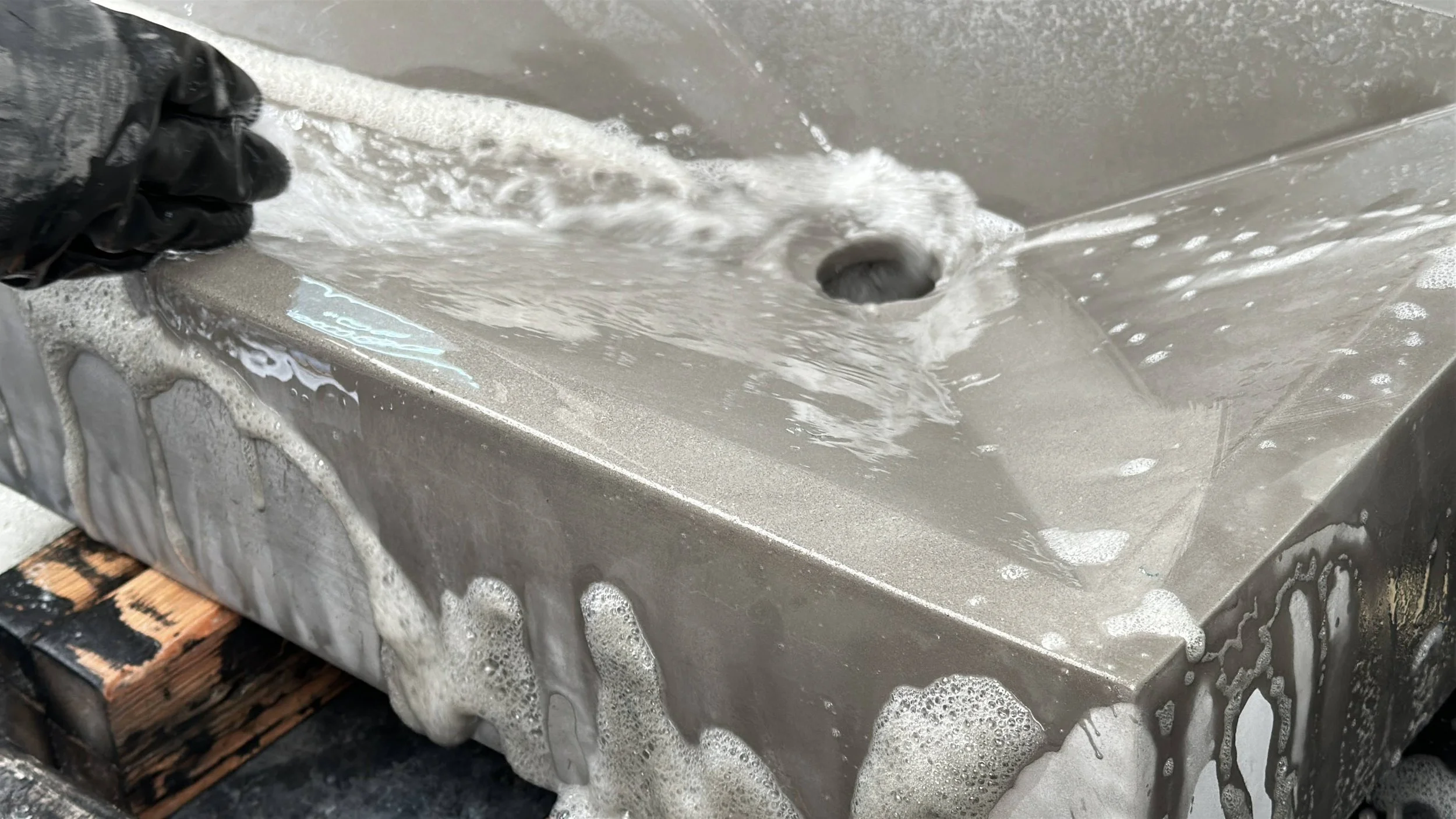
5. Seal
This is the step that separates Linkasink's concrete from unprotected or surface-coated alternatives. A penetrating sealer is applied in seven stages, driving protection deep into the concrete matrix rather than sitting on the surface. The result is a sink that resists water, oils, and staining and does not require re-sealing under normal household use.




Colorways: natural gray and Black
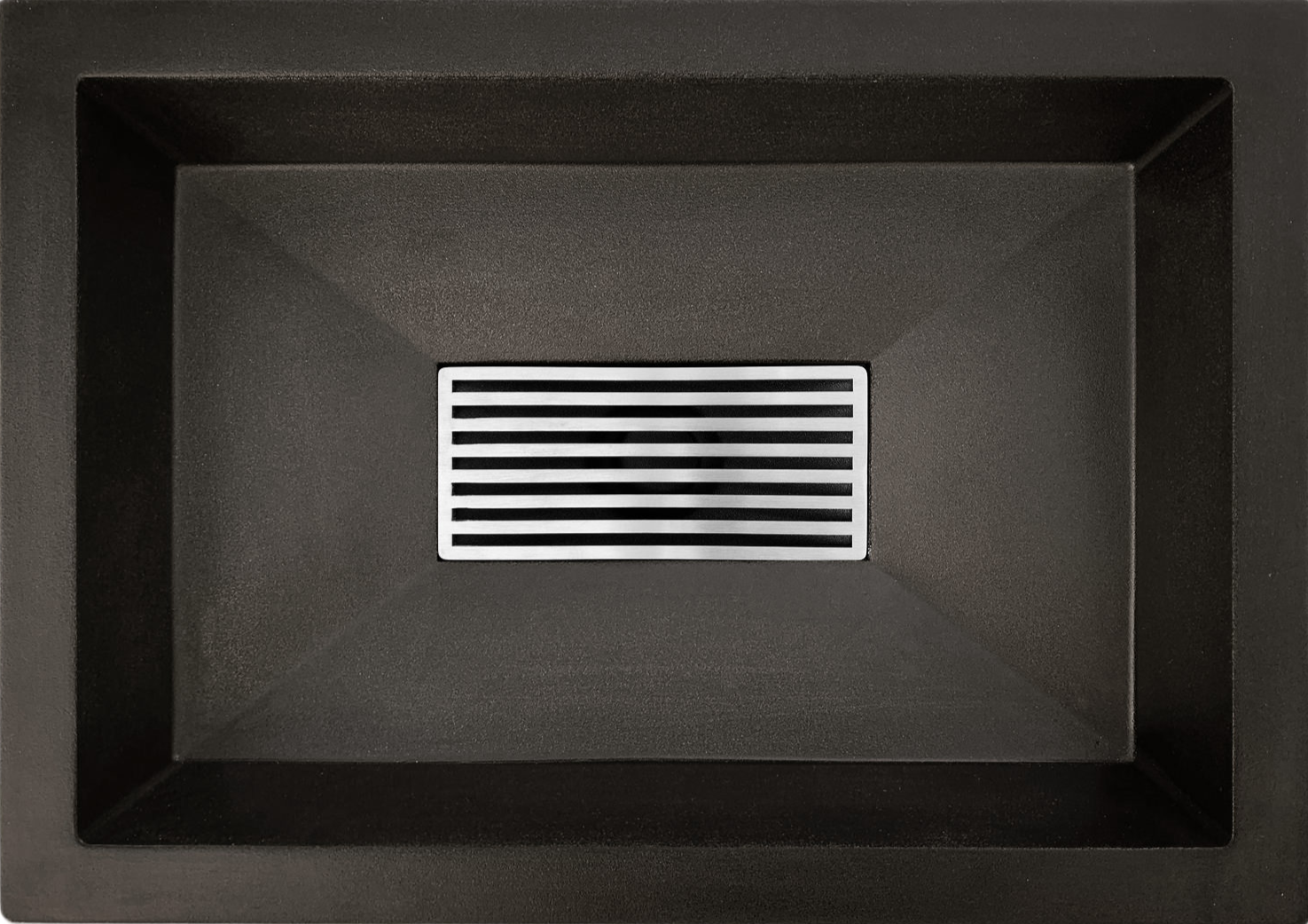
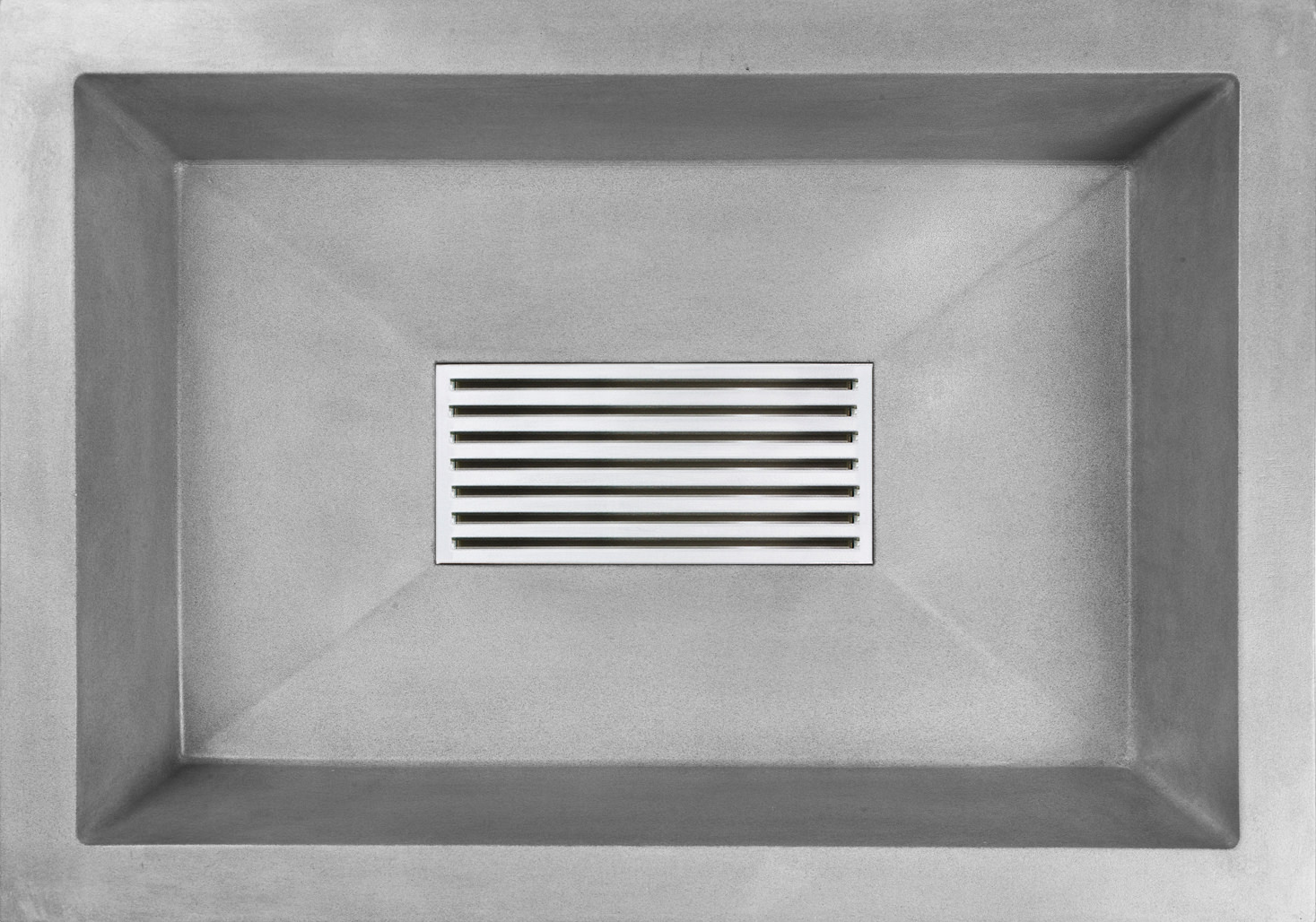
The natural gray finish offers a warm, natural concrete tone with subtle aggregate variation. Depending on the lighting, it reads as sandy and limestone-like under warm tungsten light, and shifts to classic urban concrete in cooler, natural light. Pigment runs throughout the full material depth, so the color is consistent all the way through.
It pairs beautifully with wood, natural stone, plaster, and warm metals — making it a natural fit for earthy, organic interiors.
The black finish is a strong, cool tone that performs more consistently across lighting conditions than gray. It creates a powerful visual anchor whether the surrounding space is minimal and restrained or richly detailed and layered. Like all Linkasink colors, the pigment runs through the full material depth.
It pairs well with matte black hardware, dark stone, and lacquered cabinetry — ideal for interiors that lean dramatic and considered.
Caring for your concrete Sink
The 7-step impregnating sealer applied to every Linkasink concrete piece significantly simplifies care. You do not need specialist products or a complex maintenance routine. For daily upkeep, clean your sink with Windex® with vinegar, then rinse and dry it with a soft cloth to prevent water spot buildup. For any scrubbing, use only a soft sponge or microfiber cloth. Over time, your sink will develop a natural patina — this is part of the material's character, and worth embracing. Steer clear of harsh chemical cleaners such as bleach, ammonia, and drain cleaners, as well as acidic products like pure vinegar, lemon juice, and CLR as these products can remove the sink’s protective coating. Abrasive scrubbers and steel wool pads will damage the sealed surface and should never be used. Avoid leaving standing pools of water in the sink for extended periods, and take care not to drop heavy objects directly into the basin. Finally, do not apply wax-based sealers over the existing impregnating sealer, as this can interfere with the protective finish.
Frequently Asked Questions
-
GFRC (glass fiber reinforced concrete) uses alkali-resistant glass fibers instead of steel rebar for reinforcement. This allows thinner walls — 3/8" to 1/2" vs. 1.5"+ for solid poured — dramatically reducing weight while increasing impact resistance and reducing the risk of cracking from thermal expansion. For sinks, GFRC is superior in every practical respect: lighter, stronger in the ways that matter, and capable of more complex shapes.
-
GFRC concrete sinks are much lighter than solid poured concrete. A typical Linkasink GFRC vessel sink weighs between 18 and 35 lbs depending on size, compared to 60–120 lbs for an equivalent solid cast concrete sink. This makes installation practical without structural reinforcement for most standard vanities.
-
Yes. GFRC sinks are highly durable when properly sealed. The glass fiber reinforcement prevents cracking under thermal stress, and Linkasink applies a 7-step impregnating sealer to each sink by hand, creating a surface that resists water absorption and staining. With proper care, a GFRC concrete sink will last decades — Linkasink warranties our products against manufacturing defects for the life of the product.
-
We combine a thoughtful, human-centered approach with clear communication and reliable results. It’s not just what we do—it’s how we do it that sets us apart.
-
Linkasink GFRC concrete sinks are available in Gray (a warm, natural concrete tone) and Black (a deep charcoal). Both colors run throughout the full depth of the material — they are not surface coatings — so any surface variation reveals the same color beneath. The exact tone of each sink will vary slightly, as every piece is handmade individually.
-
An unsealed or surface-coated concrete sink can stain. Linkasink's 7-step impregnating sealer penetrates the concrete matrix and creates a barrier against water, oils, and common household chemicals. Promptly wiping up spills — particularly acidic or colored liquids — is good practice. Avoid leaving harsh chemicals in prolonged contact with any surface.
-
Every Linkasink concrete sink is handcrafted in Phoenix, Arizona. The GFRC mixture is prepared, packed, cured, and sealed in our Phoenix studio by skilled craftspeople. Because each piece is made by hand, no two sinks are identical — minor variations in tone and surface texture are inherent to the process and to the material.