
Artisan Glass
HAND CRAFTED IN THE USA

What is an artisan glass sink?
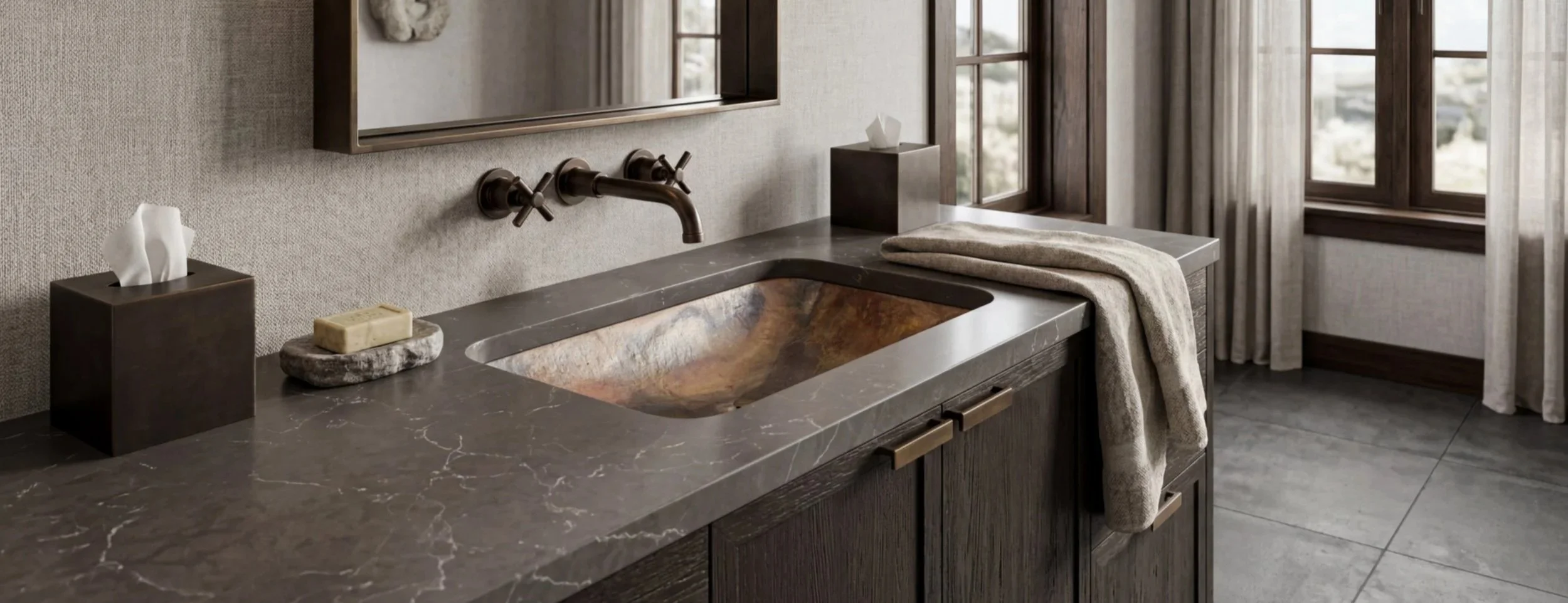
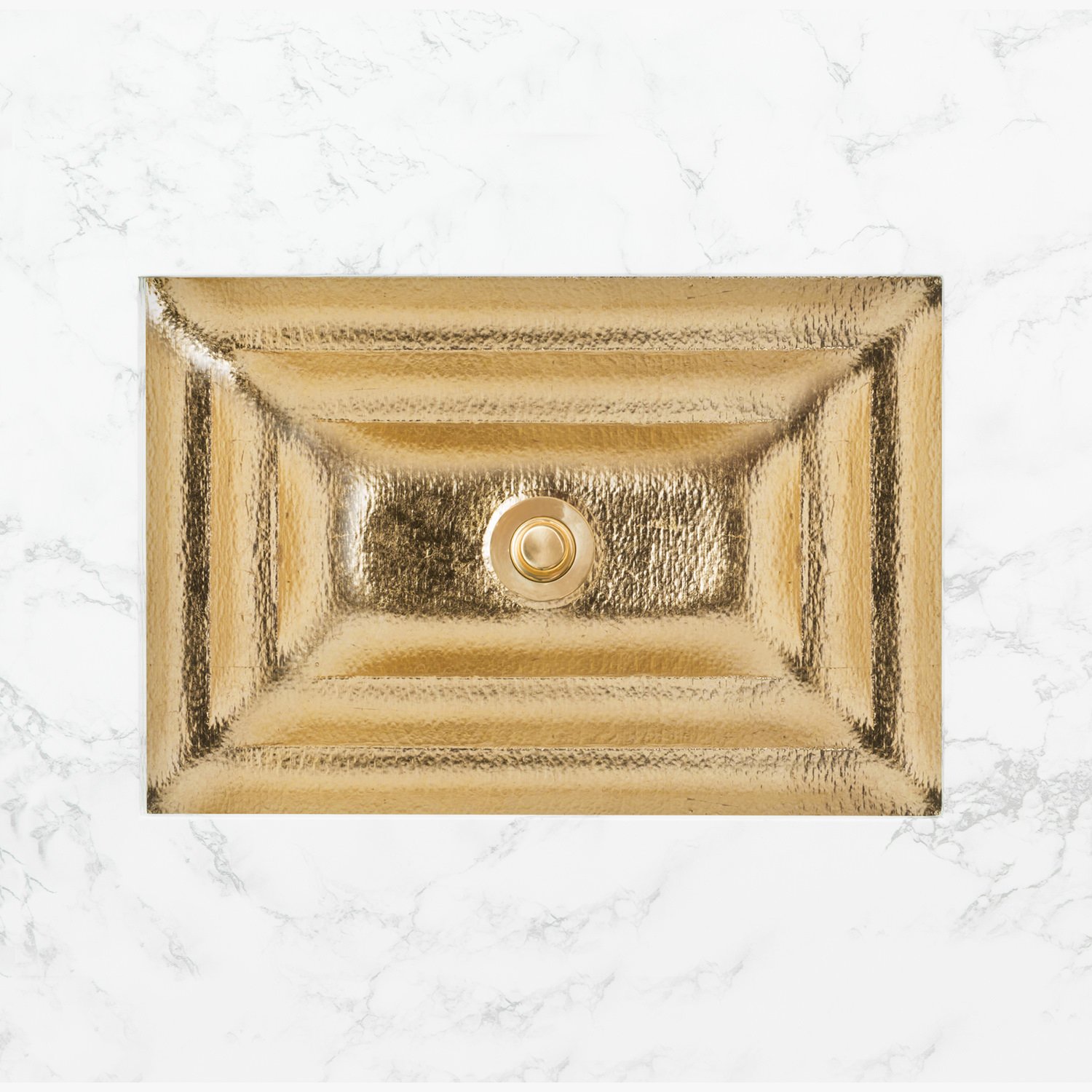
A Linkasink Artisan Glass sink is a handcrafted sink made from high-quality glass that has been shaped through repeated kiln firings and decorated using églomisé — an ancient French gilding technique in which metal leaf is applied to the back surface of the glass. The result is a sink that functions as a bathroom fixture and reads as a piece of decorative art. Each sink takes a week to make and no two are identical.
The Artisan Glass collection is available in white or black glass, with metal leaf finishes in gold, silver, or brass — applied in patterns including Stripe, River, Window, Ribbon, and Solid Églomisé. All sinks are finished and shipped from Linkasink’s studio in Phoenix, Arizona.
At Linkasink, this centuries-old technique has been adapted for use in a functional sink — a considerable technical achievement. The glass must be formed to precise dimensions, fired multiple times for structural integrity, and then gilded entirely by hand. It cannot be rushed and cannot be automated.
The Artisan Glass Process
-
![]()
1. Glass Selection
High-quality flat glass is selected and cut to the precise dimensions required for each sink model and size. The glass must be free of impurities and consistent in thickness — variations here would cause uneven firing and compromise the final form. White and black glass begin as distinct raw materials; the color runs through the full depth of the glass, not as a surface treatment.
-
![]()
2. Shaping
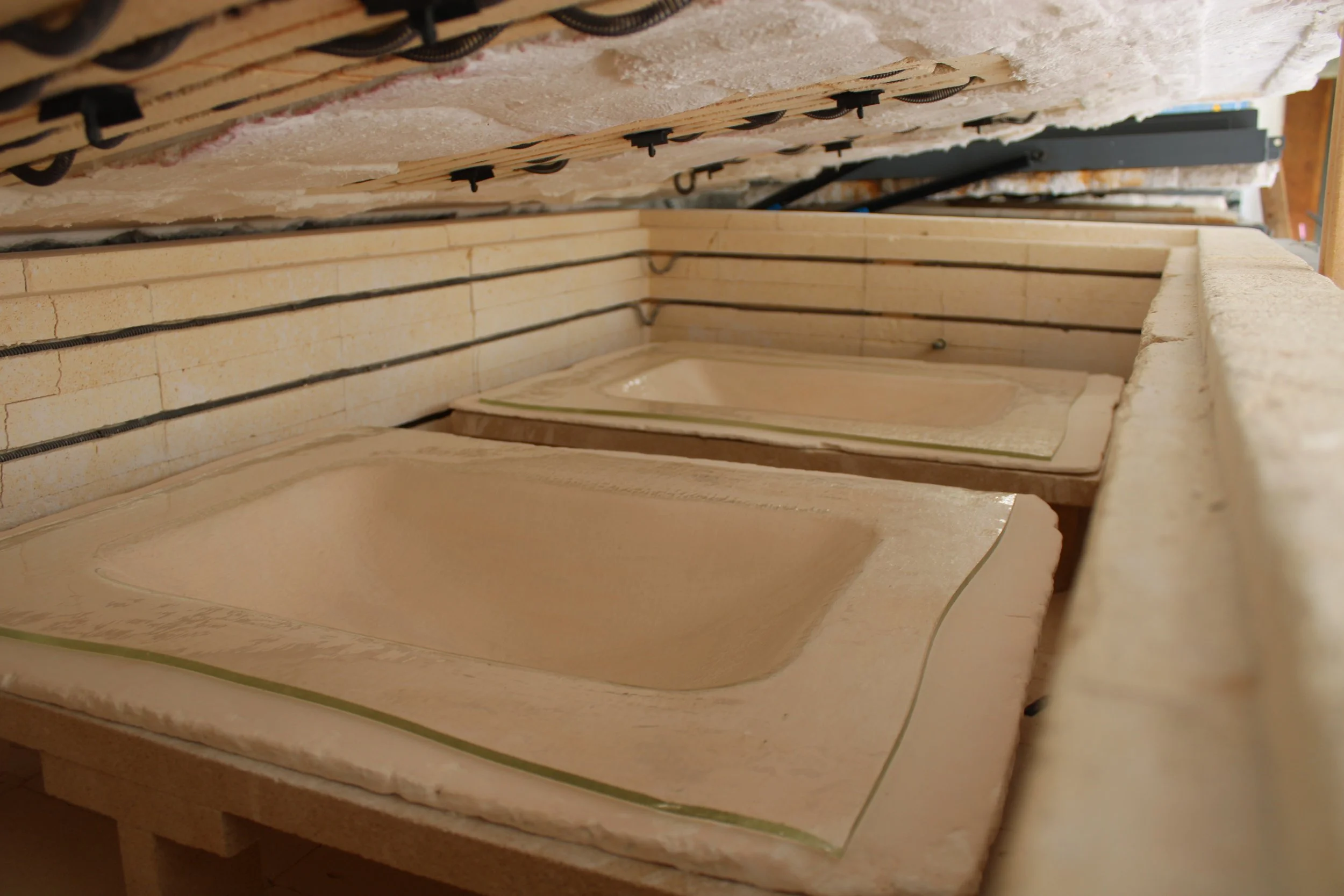
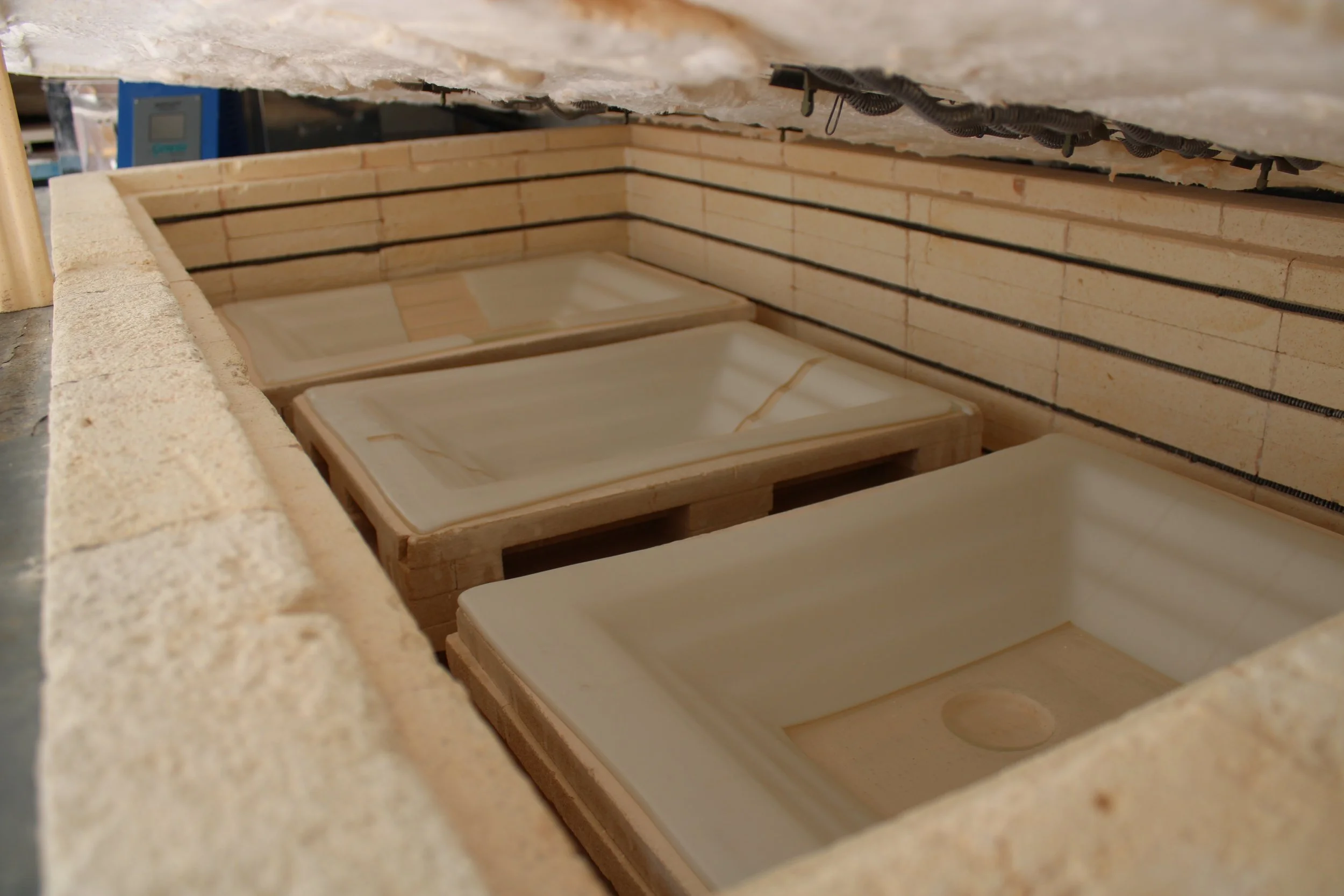
The cut glass is placed over a precision mold and fired in the kiln. Heat softens the glass until it slumps into the mold under its own weight, forming the basin shape. This first firing establishes the sink’s three-dimensional form — the depth, the curved walls, the drain area. The controlled heating and cooling cycle is critical; too fast and the glass cracks, too slow and the form loses precision.
-
![]()
3. Strengthening
The shaped sink returns to the kiln twice more. Each firing cycle builds structural integrity in the glass and refines the satin surface finish that characterizes the Artisan Glass collection. Three total kiln trips produce a sink that can withstand the thermal stress and mechanical demands of daily bathroom use. After the final firing, diamond-tipped bits are used to cut the drain opening to specification.
-
![]()
4. The Églomisé
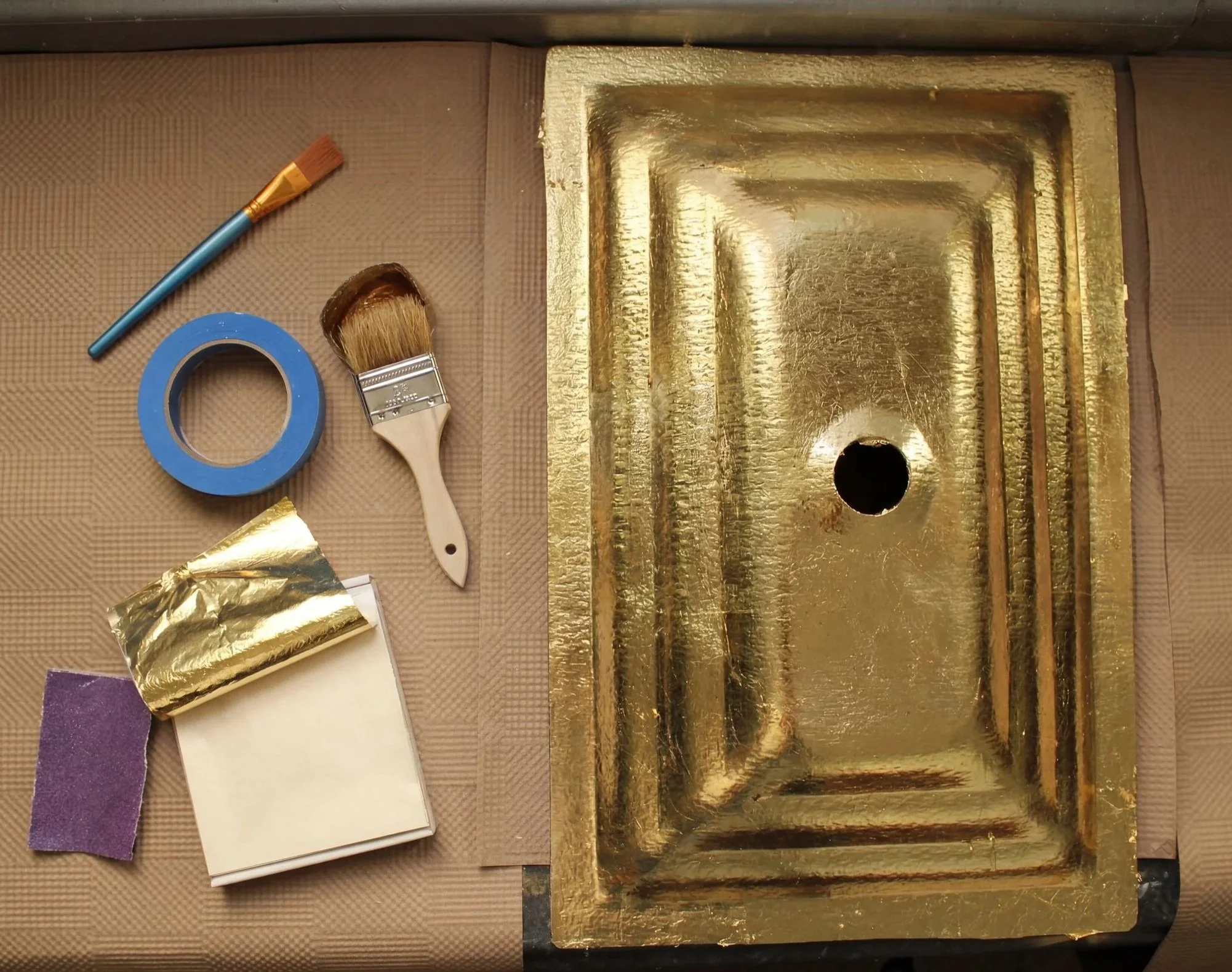
With the glass form complete, an artisan applies metal leaf — gold, silver, or brass — to the underside of the sink by hand. The leaf is cut, positioned, and adhered in the pattern specific to that model: broad horizontal stripes for the Stripe, organic flowing bands for the River, geometric framed panels for the Window, full coverage for the Solid Églomisé. Because the leaf is applied to the reverse surface, what you see from above is the pattern viewed through the depth of the glass — luminous, slightly softened, and impossible to replicate by machine.
-
![]()
5. Sealing
Once gilded, the metal leaf is sealed on the underside of the sink to protect it from moisture and abrasion. The sink is then inspected — pattern placement, edge finish, drain opening, surface quality — before it is approved for shipping. Any sink that does not meet standard is rejected, and the process begins again.

A sink custom to you
Since every Artisan Glass sink is made to order by hand in our Phoenix studio, it is built around your design — not the other way around. You choose the glass color, the metal leaf finish, and the pattern. The result is a piece made specifically for your space, by the hands of our artisans, from the combination you select.
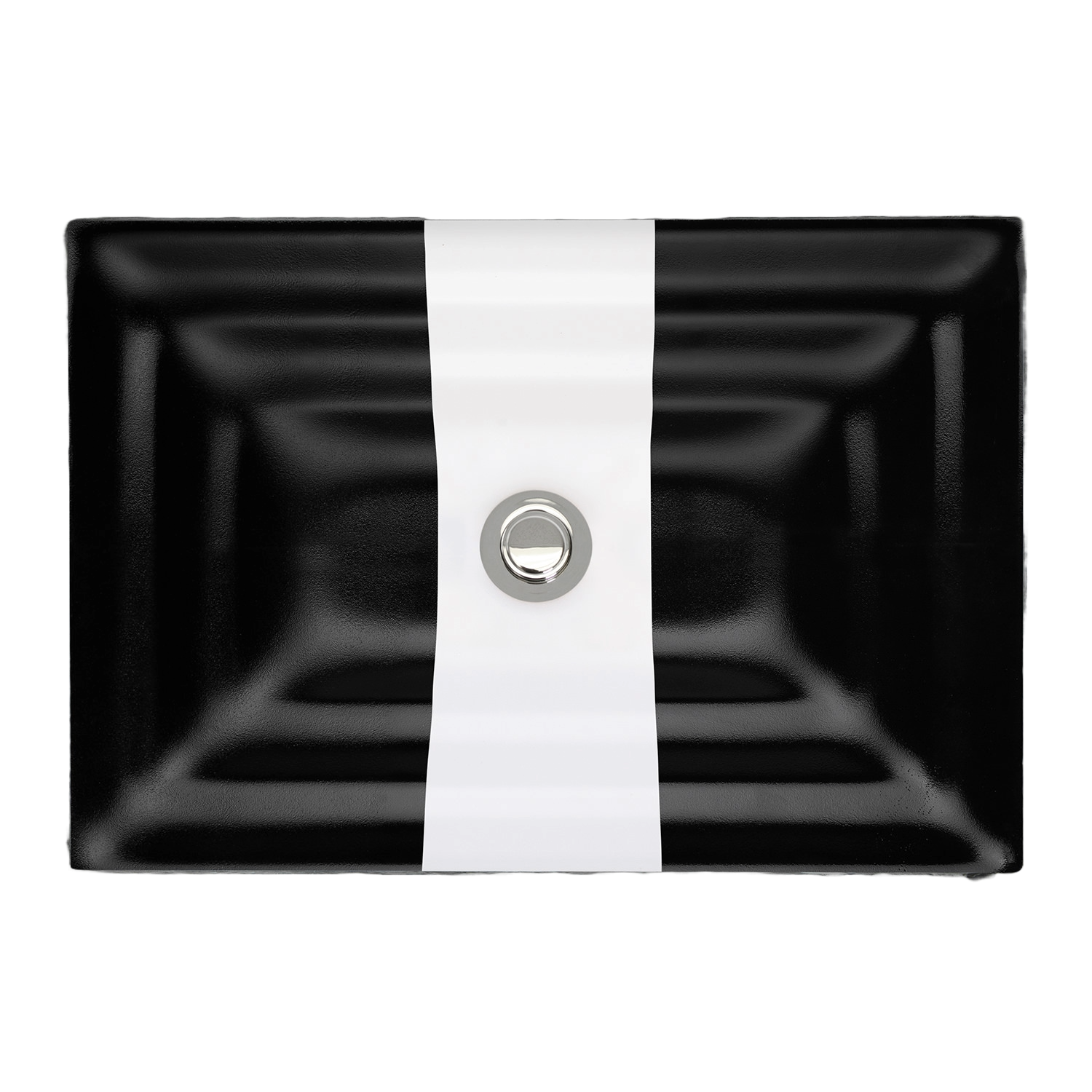
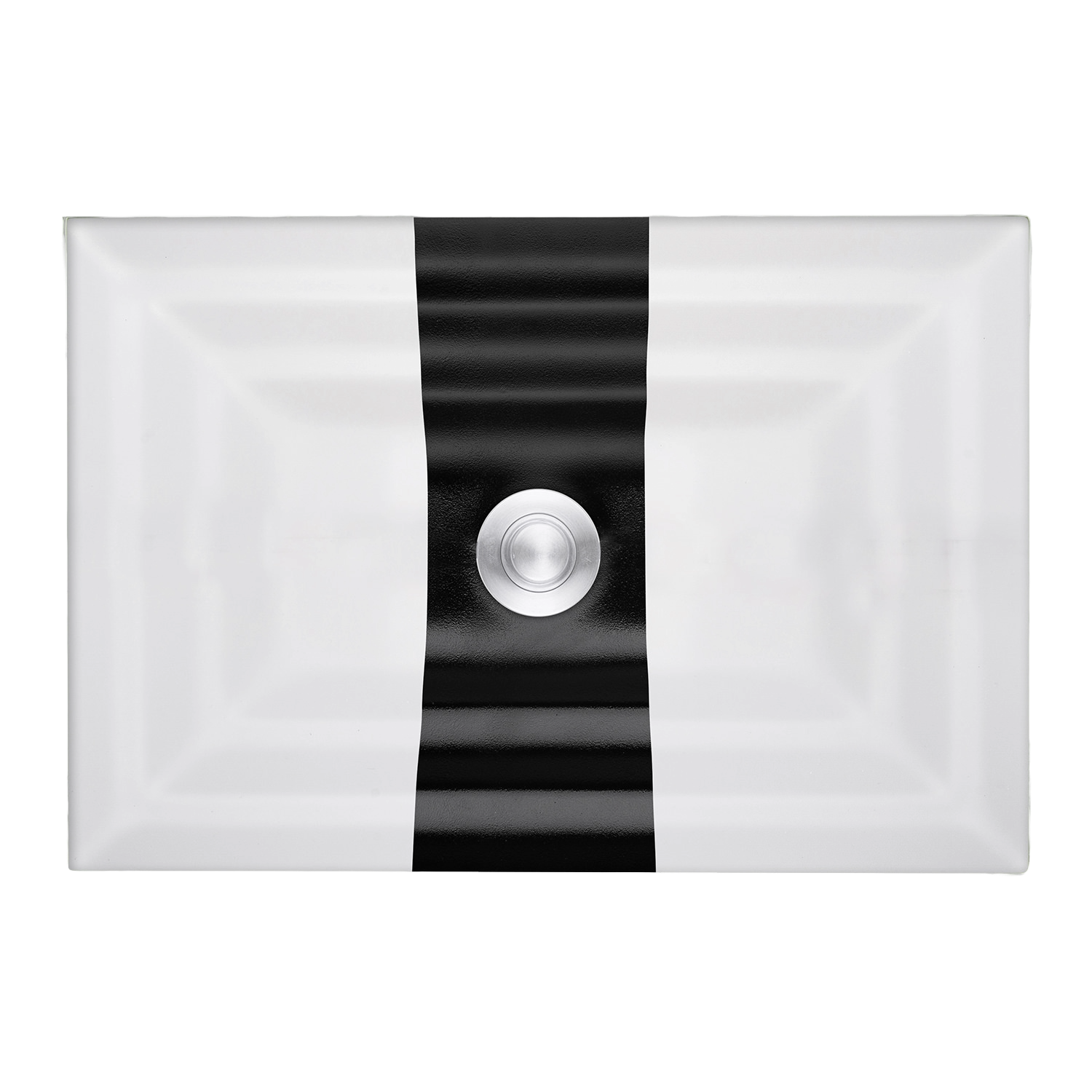
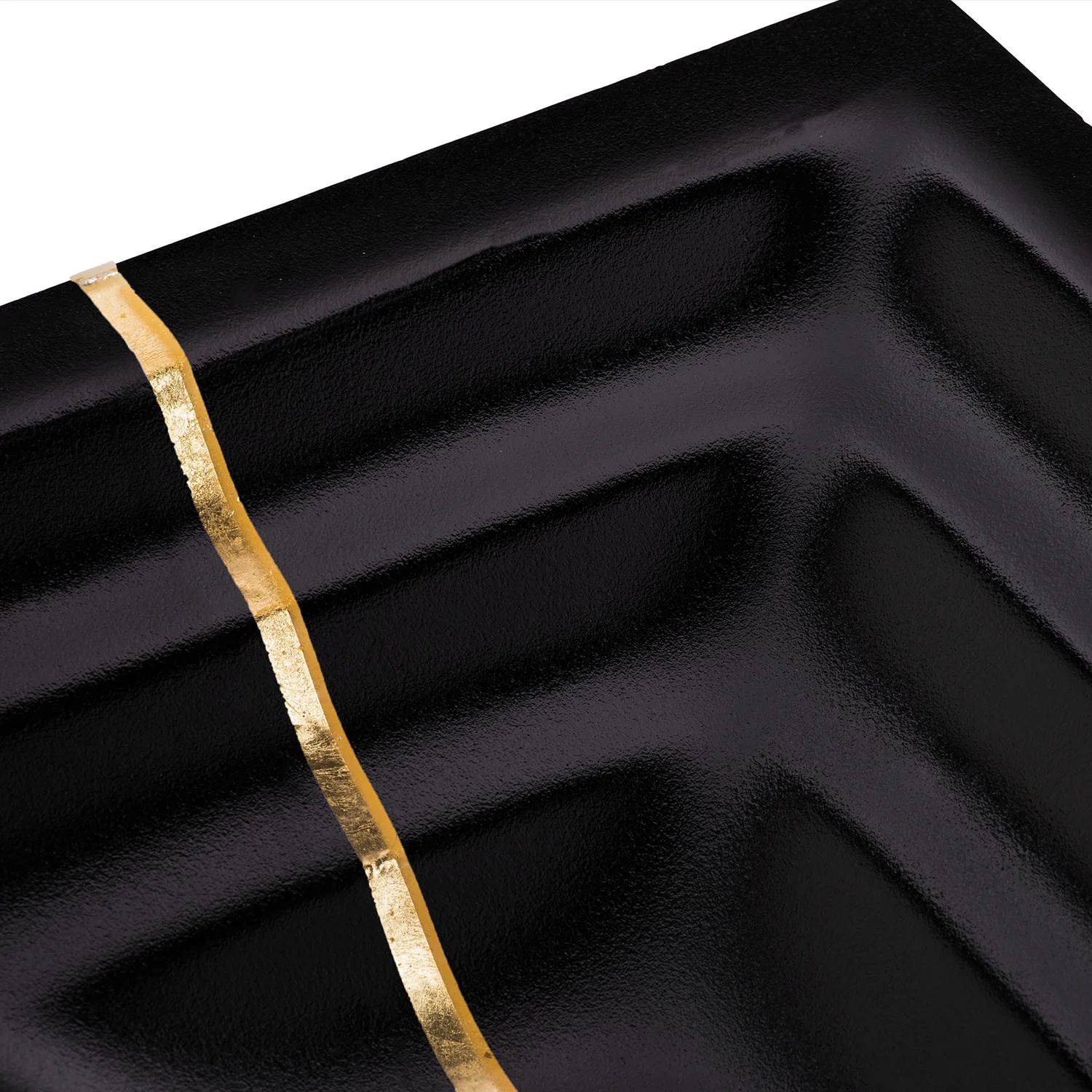
White glass is clean and luminous — it makes metal leaf appear warm and prominent, and reads lighter and more reflective overall. Black glass is dramatic and grounding — the metal leaf reads as highlights against depth, creating stronger contrast. Both colors are integral to the material, meaning the pigment runs through the full depth of the glass rather than sitting as a surface coating, and both develop a satin finish through the kiln firing process. White pairs naturally with warm metals and lighter stone; black pairs with dark cabinetry and matte fixtures.
color
Black or White
Pattern
stripe, river, window, ribbon, solid Églomisé
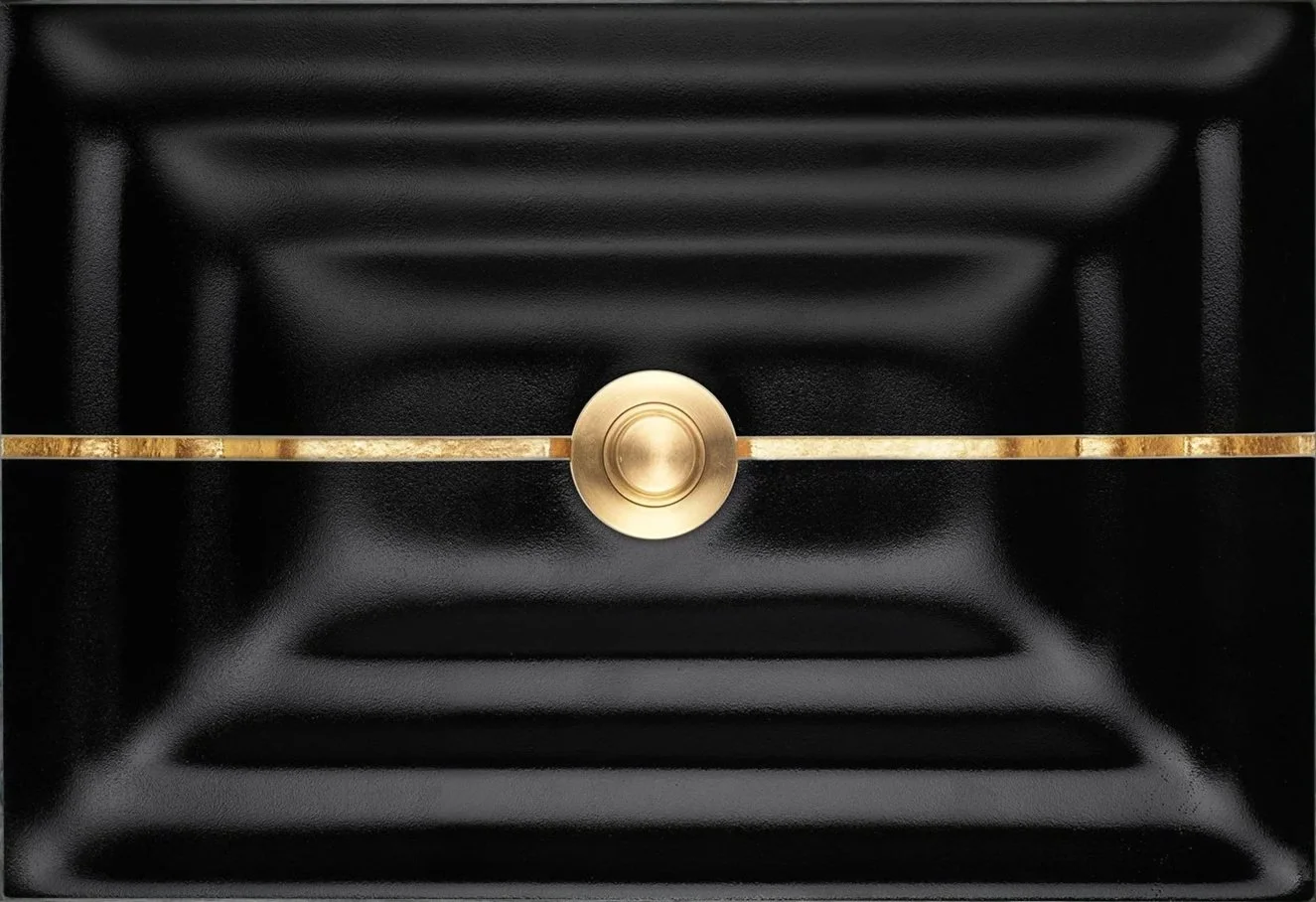
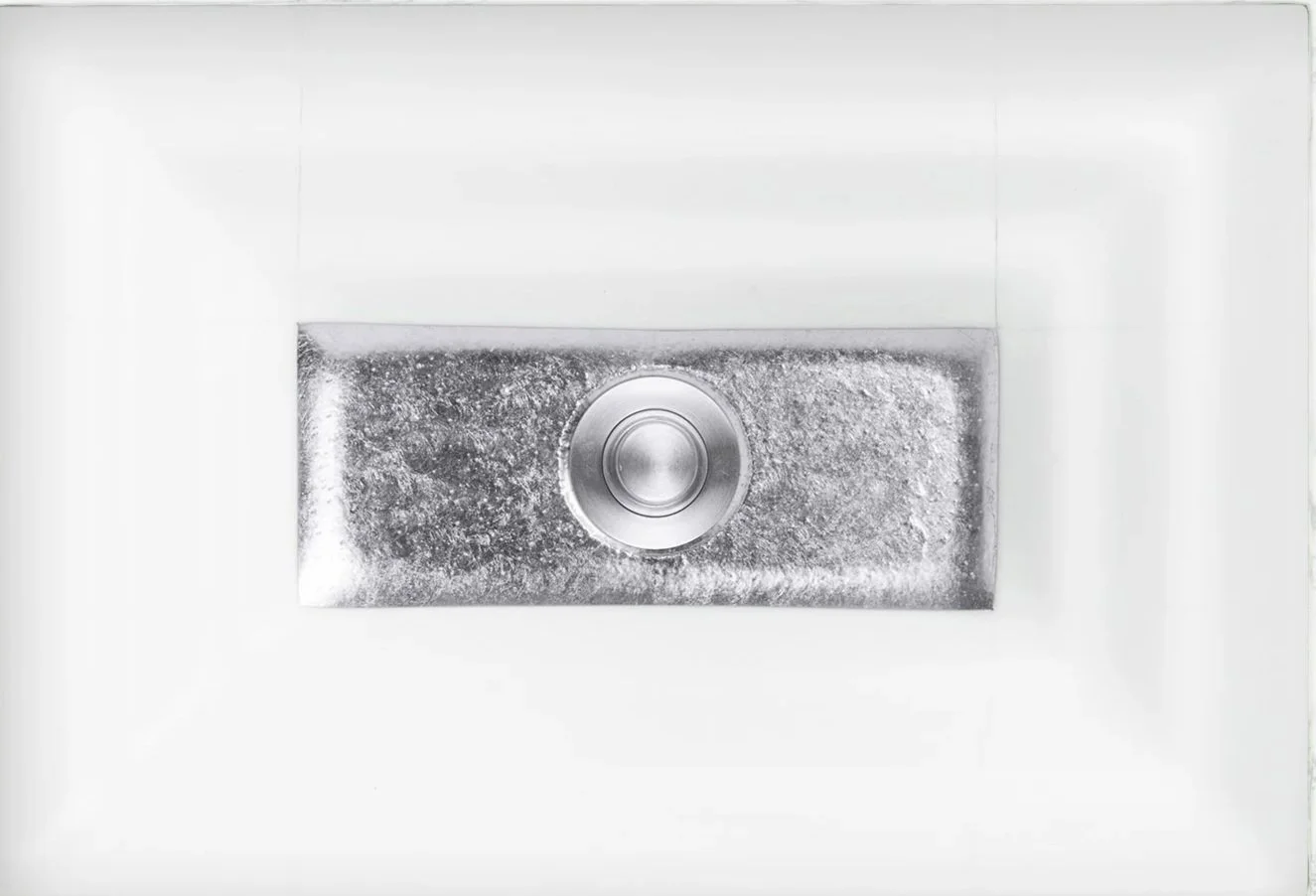
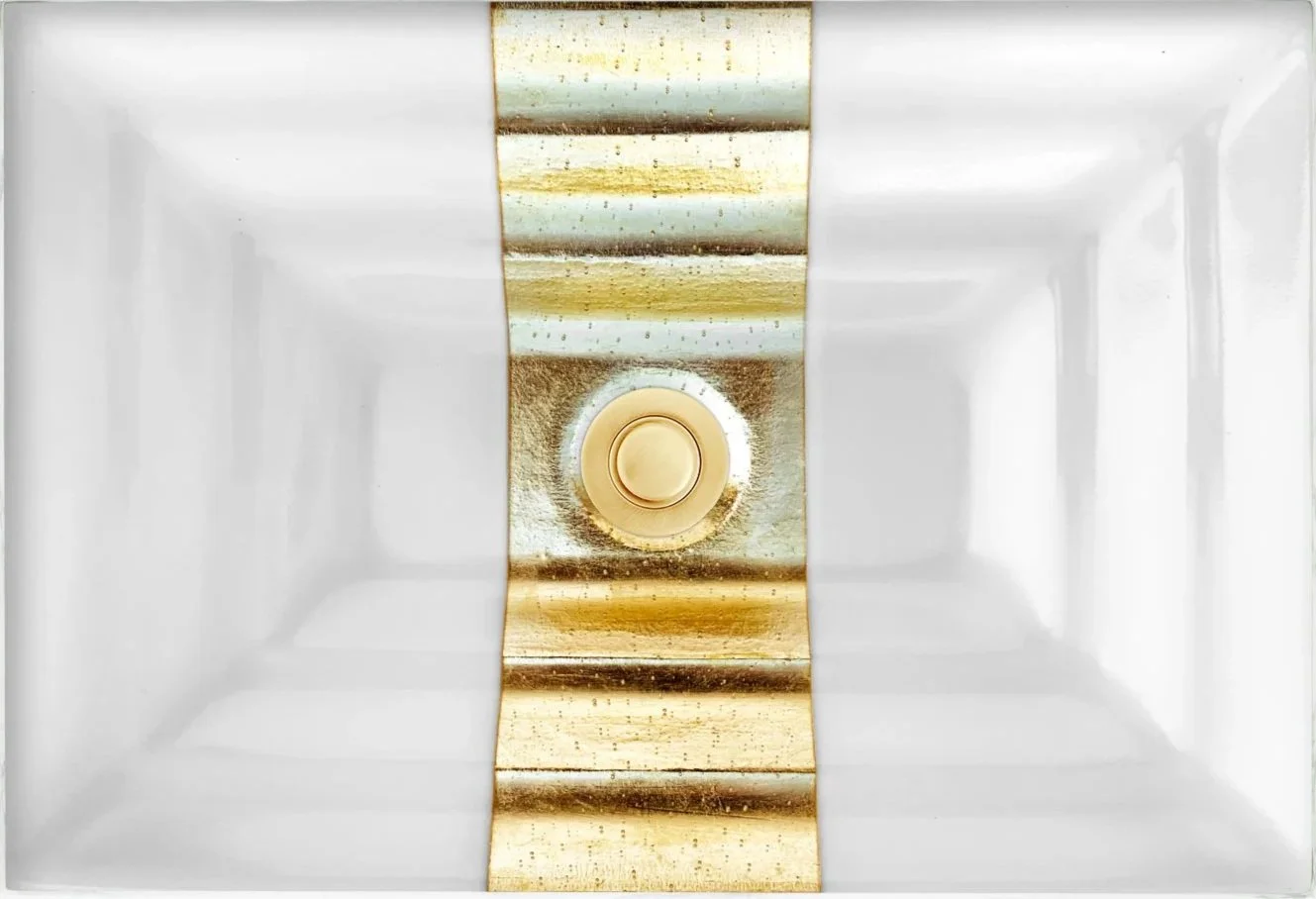
Artisan Glass sinks are organized by pattern — the arrangement and coverage of metal leaf on the glass. The Stripe uses broad parallel bands alternating with clear glass. The River follows flowing organic lines, hand-cut and unique to each piece. The Window places a clear central panel within a metal leaf frame. The Ribbon is the most restrained, with narrow metal leaf at the edges only. And the Solid Églomisé covers the entire underside in metal leaf — the fullest expression of the gilding technique. The Window Églomisé (AG10) adds a further layer: rather than leaving the framed panel clear, it is gilded, producing a more complex effect that shifts with light and angle of view.

Finish
Gold, Silver, French BrONZE
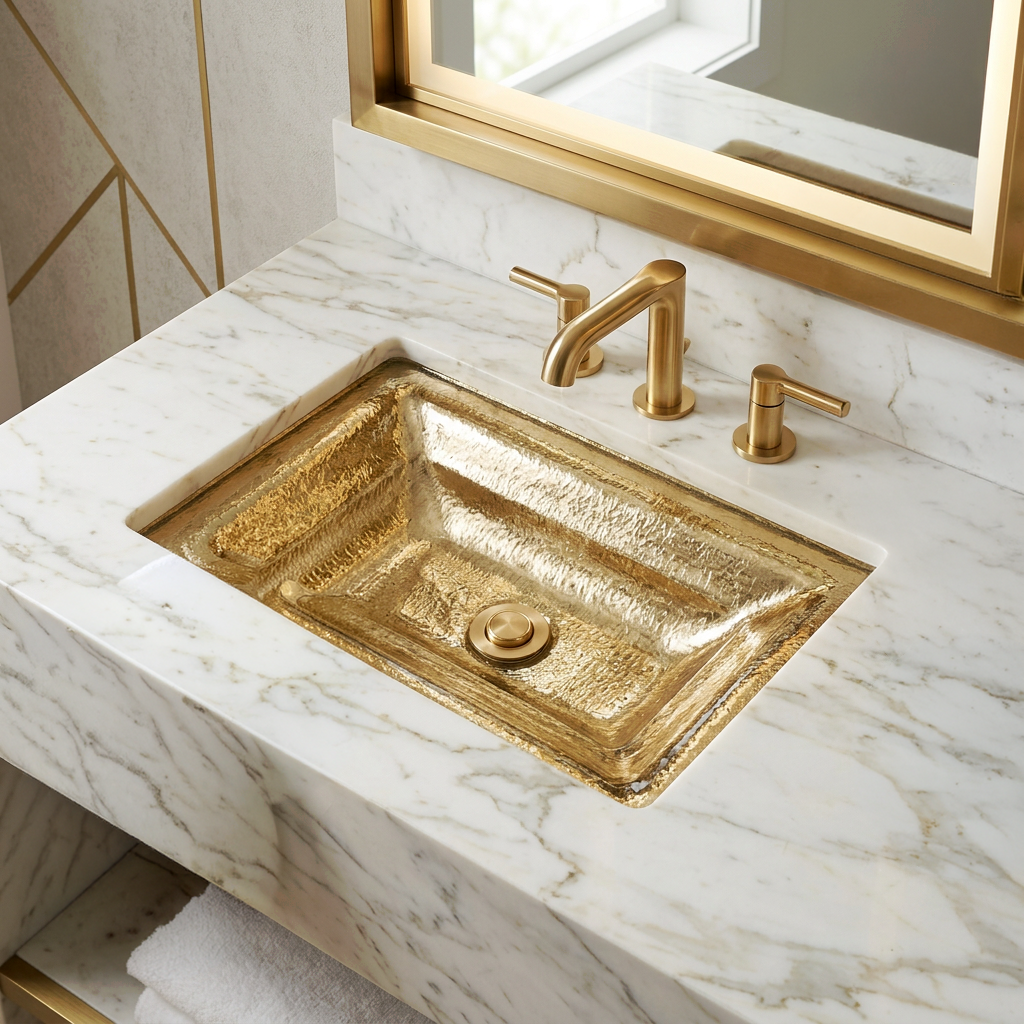
Gold leaf is the richest and warmest of the three options, pairing naturally with unlacquered brass hardware and warm stone. Silver leaf reads cooler and more contemporary, at home with polished nickel and chrome fixtures. French Brass leaf sits between the two — a middle tone that works equally well in warm and neutral palettes. In all three cases, the leaf is applied to the underside of the glass, meaning the depth of the material softens and enriches the metal tone before it reaches the eye. Not all combinations are available across all patterns — check the individual product pages for the options specific to each model.

Artisan Glass is the most low-maintenance material in the Linkasink collection. The glass surface is non-porous, so it doesn't absorb water, oils, or household chemicals, and it never needs sealing or specialist products. For everyday cleaning, mild soap and warm water or a non-ammonia based glass cleaner with a soft cloth or microfiber is all you need.
Despite what you might expect from a glass sink, the material is genuinely strong. Three kiln firings build a level of structural integrity that handles the thermal stress and daily demands of normal bathroom use without issue. What you are protecting against is not fragility but specific vulnerabilities on the surface. Abrasives and scrubbing pads will scratch the glass and those scratches cannot be repaired, so stick to soft cloths and gentle cleaners. Bleach, ammonia, and acidic products like CLR or vinegar can compromise the sealing on the underside of the sink over time, so avoid those as well. And while the glass holds up well to everyday use, a heavy object dropped directly into the basin can chip or crack it — something worth keeping in mind when choosing where in your home this sink makes the most sense.
A Note on Thermal Shock
In normal bathroom use, thermal shock is unlikely to be a concern. We do not recommend using glass sinks in kitchen applications where contact with very hot water is more frequent, avoid pouring boiling water directly onto a cold glass surface.
How to Care for an Artisan Glass Sink
Where the artisan glass sink fits best
Artisan Glass is the most decorative material in the Linkasink collection — and the most specific in its design intent. It rewards buyers who want the sink to be the visual centerpiece of the space.
Artisan glass is a strong choice if you want a sink that functions as decorative art, especially in a bathroom where light, reflection, and surface detail drive the concept. It suits those who appreciate handcraft and are working with gold, silver, or brass tones in their hardware. The non-porous surface is easy to maintain, making it particularly well-suited to powder rooms and guest baths where the sink is on display.
Artisan glass may not be the right fit for high-traffic family bathrooms where impact is a concern, or for palettes built entirely on cool, matte tones with no metallic presence. For very large format sinks, hammered metal or concrete will serve better, and if minimal maintenance is the top priority, Linkasink's stainless or smooth metal options are worth considering.
-
Églomisé is an 18th-century French decorative technique in which metal leaf — gold, silver, or brass — is applied to the reverse side of a glass surface and then sealed. The term comes from Parisian framer Jean-Baptiste Glomy. Because the metal leaf sits behind the glass rather than on its surface, the pattern appears to glow from within and changes character with light and angle of view. At Linkasink, this technique is applied to handcrafted glass sinks — one of the few applications of églomisé to a functional bathroom fixture.
-
Each Artisan Glass sink takes five days to complete. The process involves selecting and cutting the glass, three separate kiln firings to shape and strengthen the glass, hand-application of metal leaf in the églomisé technique, sealing, and a final quality inspection. No stage can be shortened without compromising the result. Because the process is entirely handmade, production quantities are limited.
-
Yes, within their design context. The three-stage kiln firing process produces glass that is structurally strong and resistant to the thermal stress of normal bathroom use. The glass surface is non-porous and does not stain or absorb water. The main vulnerability is impact — a heavy object dropped directly into a glass sink can chip or crack it. For powder rooms, guest baths, or lower-traffic spaces, Artisan Glass sinks perform excellently.
-
Use a mild non-abrasive glass cleaner or gentle dish soap with warm water and a soft cloth or microfiber. Avoid abrasive scrubbers, bleach, ammonia-based cleaners, and acidic products. Dry after use to prevent water spots. The glass surface is non-porous and easy to maintain — no sealing or specialist products are required under normal household use.
-
Linkasink Artisan Glass sinks are available in white or black glass, with metal leaf finishes in gold, silver, and brass. Not all combinations are available across all patterns — specific options for each model are listed on the individual product page. White glass with gold leaf and black glass with silver leaf are among the most specified combinations.
-
The glass components are formed and the églomisé gilding is applied by skilled artisans. Each finished sink is inspected, sealed, and shipped from Linkasink’s facility in Phoenix, Arizona. Because every sink is made individually by hand, no two pieces are identical — minor variations in the gilding pattern and glass character are inherent to the process.