
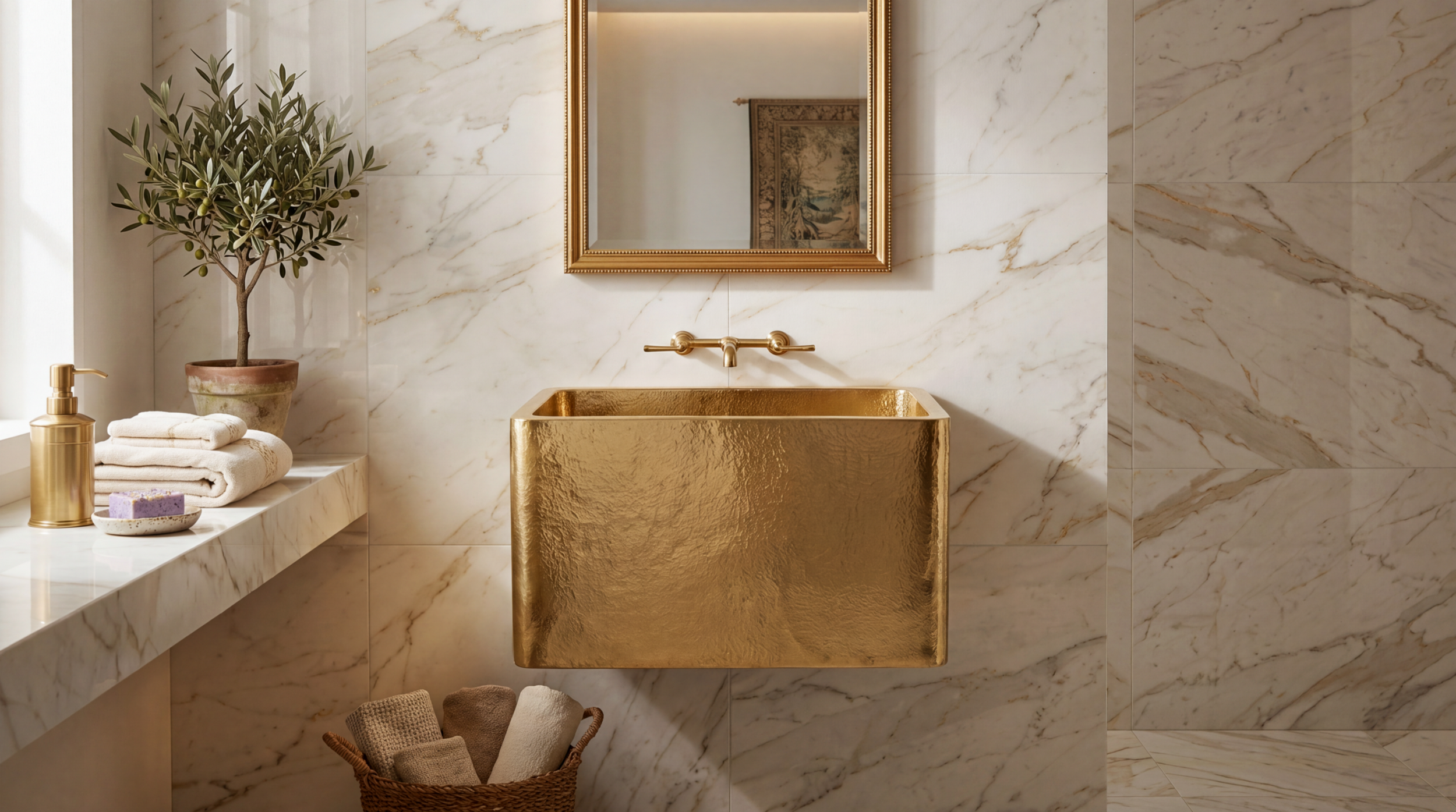
Hammered MEtals
STRUCK BY HAND. MADE TO LAST A LIFETIME
lINKASINK ORIGINS

Linkasink was born from a designer's refusal to settle. When the founder of Linkasink was working as an interior designer he could not find a copper sink worthy of his project. Frustrated by the lack of offerings in the sink market he began working directly with skilled copper artisans from around the world to create something unique and memorable. Marking the beginning of a company built on the conviction that a sink could be a work of art.
What started as one copper sink became a movement. Today, Linkasink offers a wide array of products built from luxury materials and processes from around the world. However, hammered metal is where we got our start and it has a special place in our hearts. We think it will find a place in yours too.
The Hammered Metal Process
-
![]()
1. Metal Selection
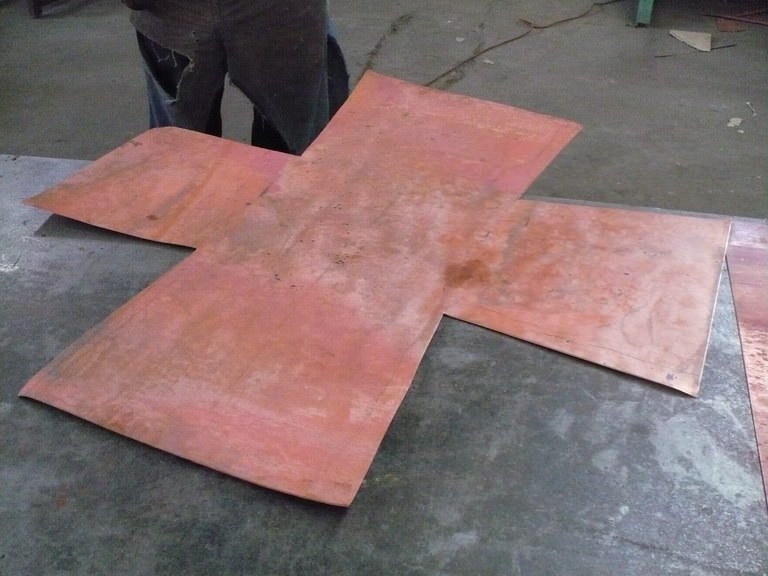
It starts with the metal. Each sink begins as a flat sheet of 12-gauge high-grade copper, brass, or 304 stainless steel that is cut to size with precision. The gauge and grade aren't arbitrary. We use materials from around the world that will hold their shape under the hammer, resist corrosion for decades, and carry the weight of the work to come.
-
![]()
2. Shaping
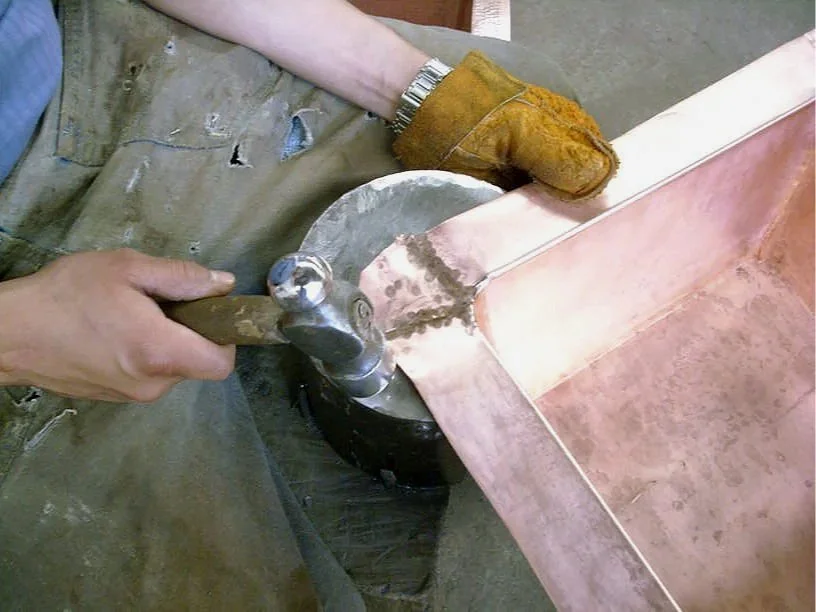
The flat sheet metal becomes a sink through a process of shaping and forming by hand. The sheet is worked into its final silhouette: round, square, oval, or farmhouse — coaxing the metal into three dimensions without cracking or warping. This is where the form takes shape before a single hammer falls.
-
![]()
3. Hammering
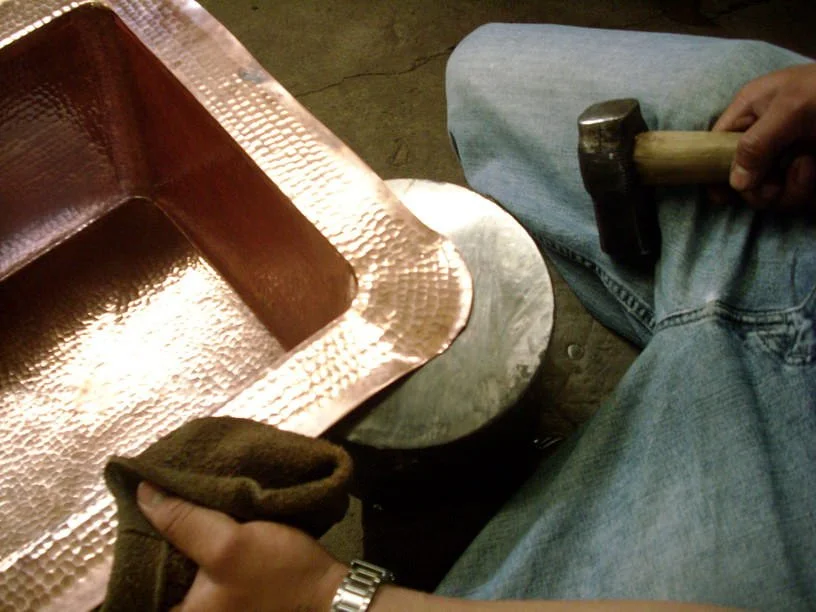
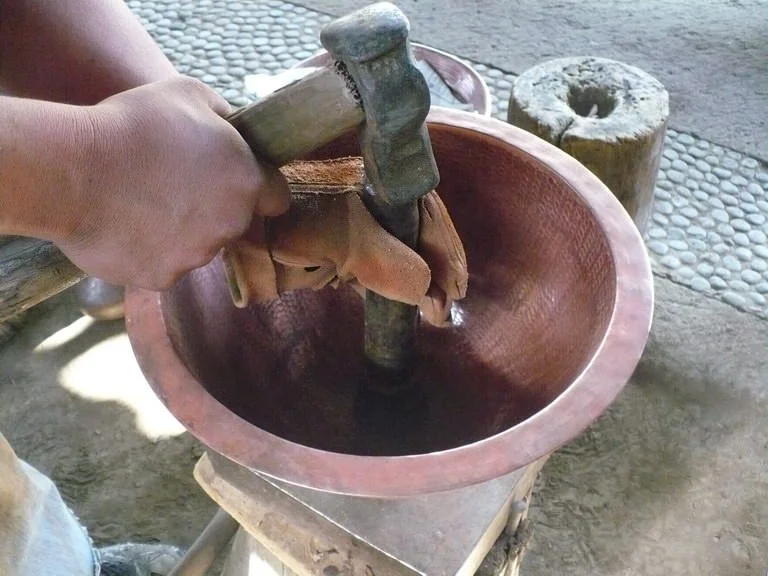
This is the heart of it. An artisan works across the entire surface of the sink, striking the metal by hand at a rate of 20 strikes per inch. Every inch. The work is methodical and unhurried. There is no shortcut and no machine that can replicate it. The texture that emerges is subtle, rhythmic, and unmistakably human.
-
![]()
4. Detailing
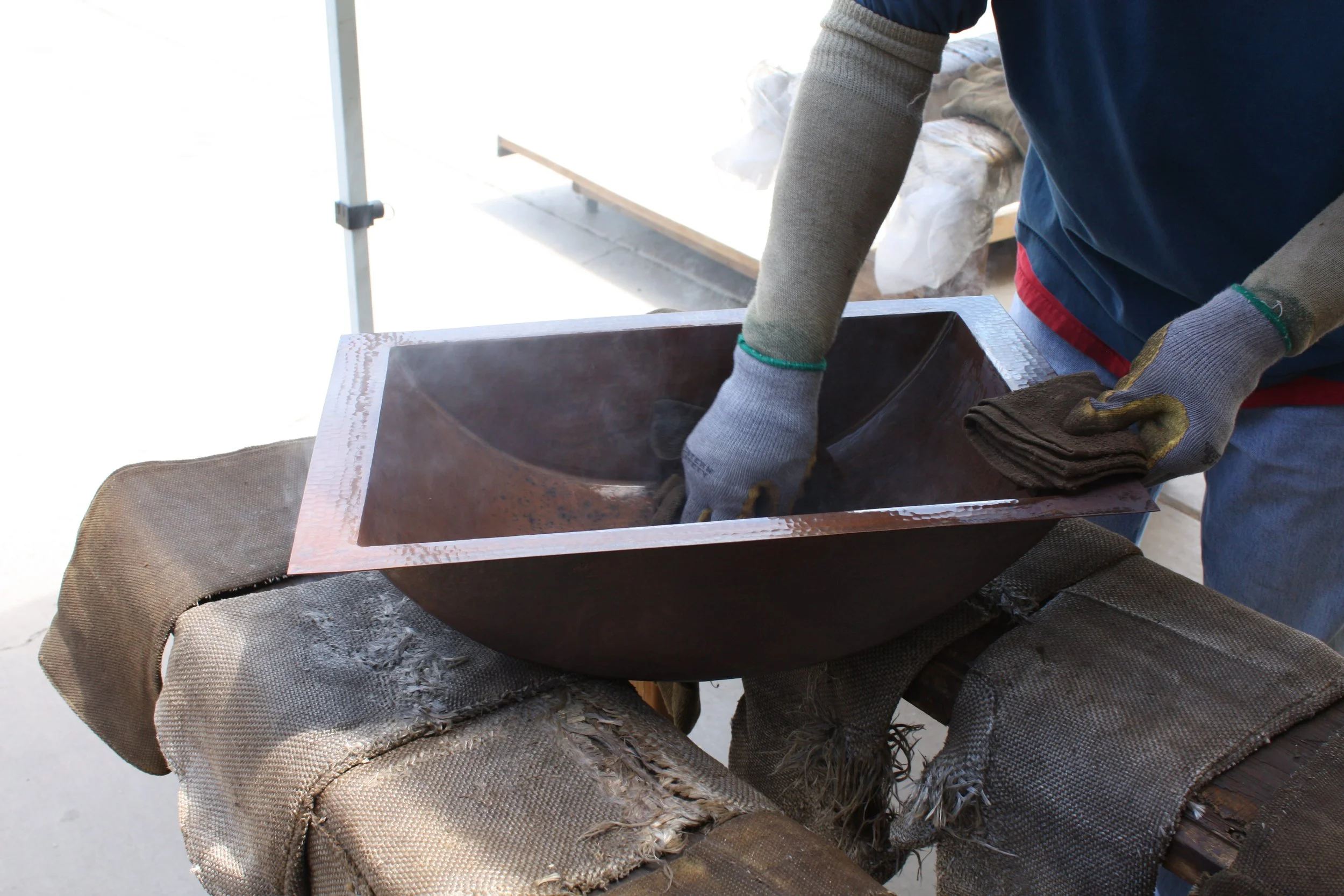
Once the hammering is complete, the sink is refined. Edges are smoothed, drain openings are cut, and the surface is carefully inspected and corrected by hand. The sinks are treated with various processes depending on the material to assists in preserving the material and to prepare the surface for its final finish.
-
![]()
5. Finishing
The finish is the final expression of the sink's character, and at Linkasink it is anything but an afterthought. These finishes become part of the metal itself, evolving beautifully with use over time. The finishing processes were built to highlight each material’s natural beauty, not to hide it.
A Material and finish for Every Vision
Metal is not a monolith. Copper ages differently than brass. Stainless behaves differently than nickel. Each material has its own personality, its own response to its environment, and its own way of making a room feel complete. At Linkasink we work with copper, brass, stainless steel, and nickel plated copper — each available in a range of finishes from bright and polished to dark and weathered, so the sink you choose looks exactly the way you imagined it
The Metals
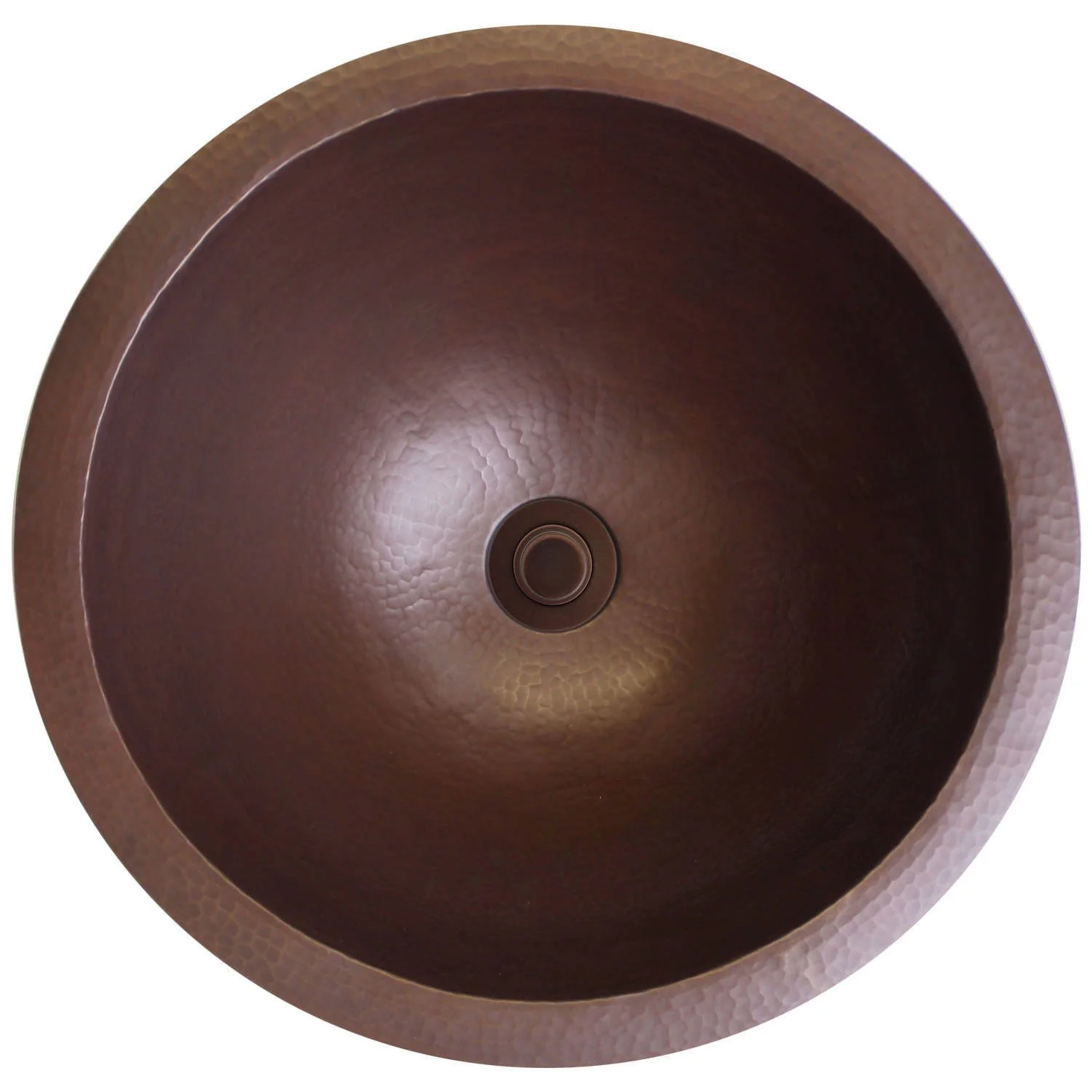
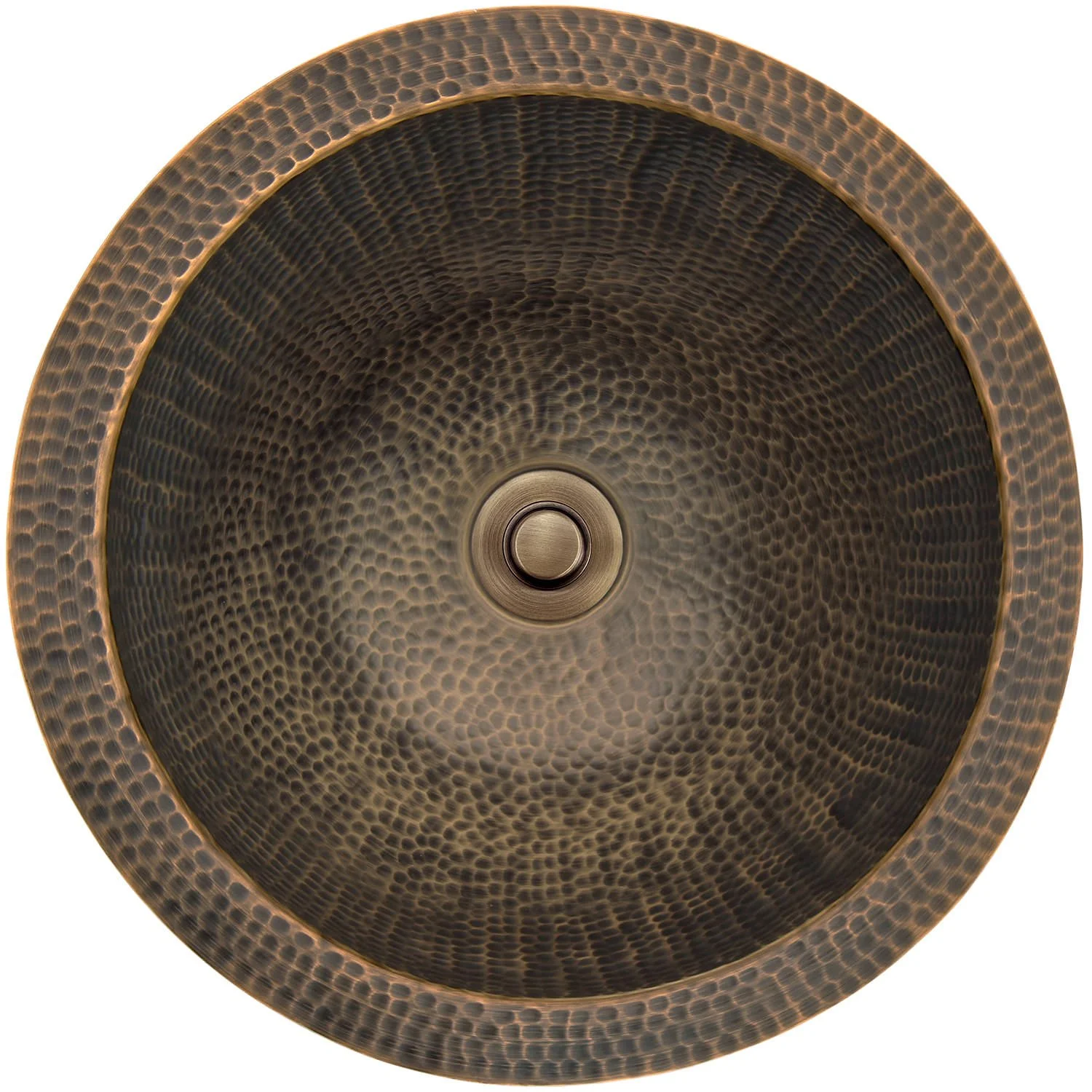
Copper is where Linkasink began, and it remains the soul of the collection. It is a warm, living metal that responds to its environment — developing a natural patina over time that deepens its color and character. No two copper sinks age in exactly the same way, which means the sink you install today will look richer and more beautiful a decade from now than it does on the day it arrives.
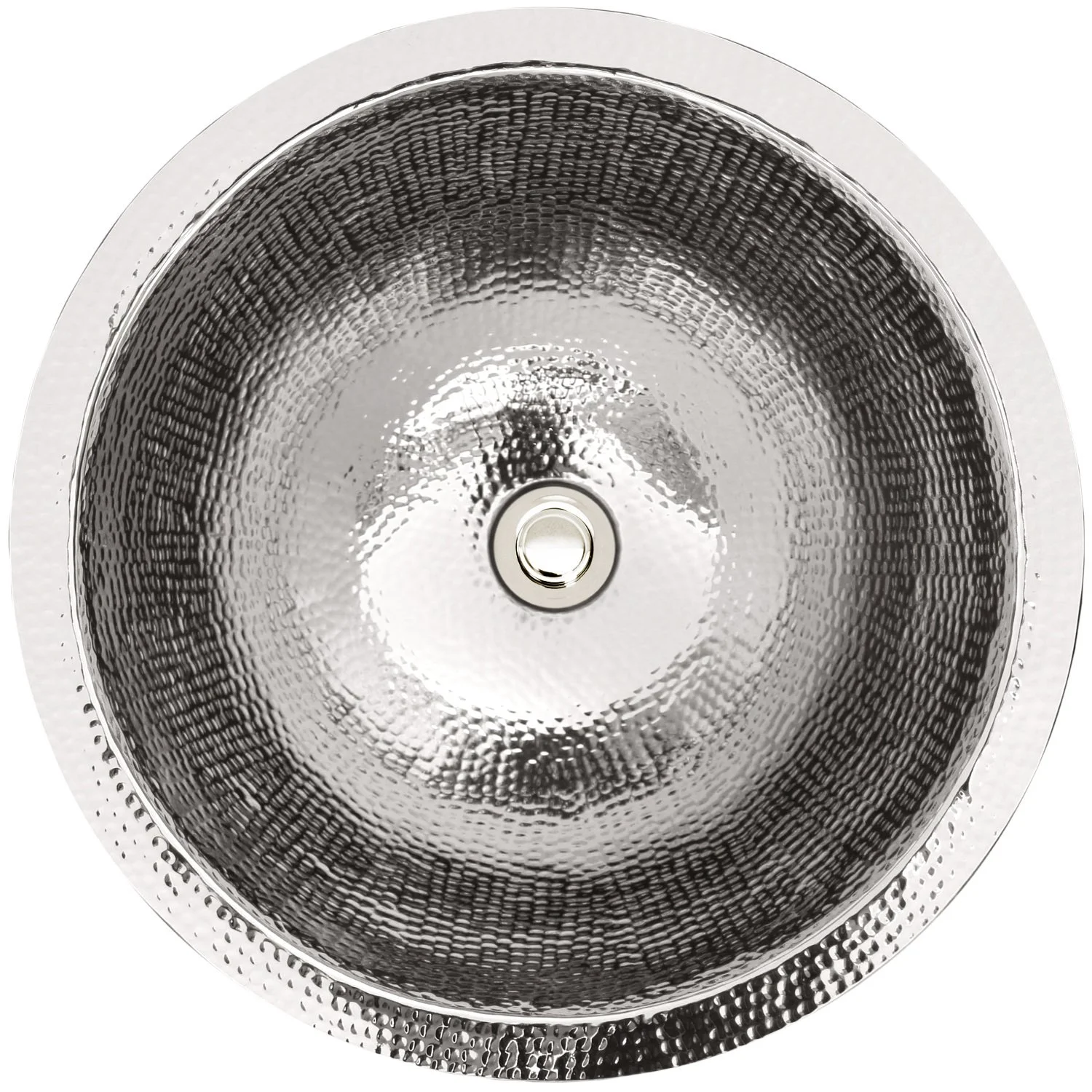
Stainless Steel is the workhorse of the collection — but in Linkasink's hands it becomes something far more considered. Built from 304-grade steel and hand-hammered to the same standard as every other material we work with, our stainless sinks are as beautiful as they are indestructible. The hammered texture catches light in a way smooth stainless never could, and it hides the water spots and scratches that plague ordinary steel sinks.
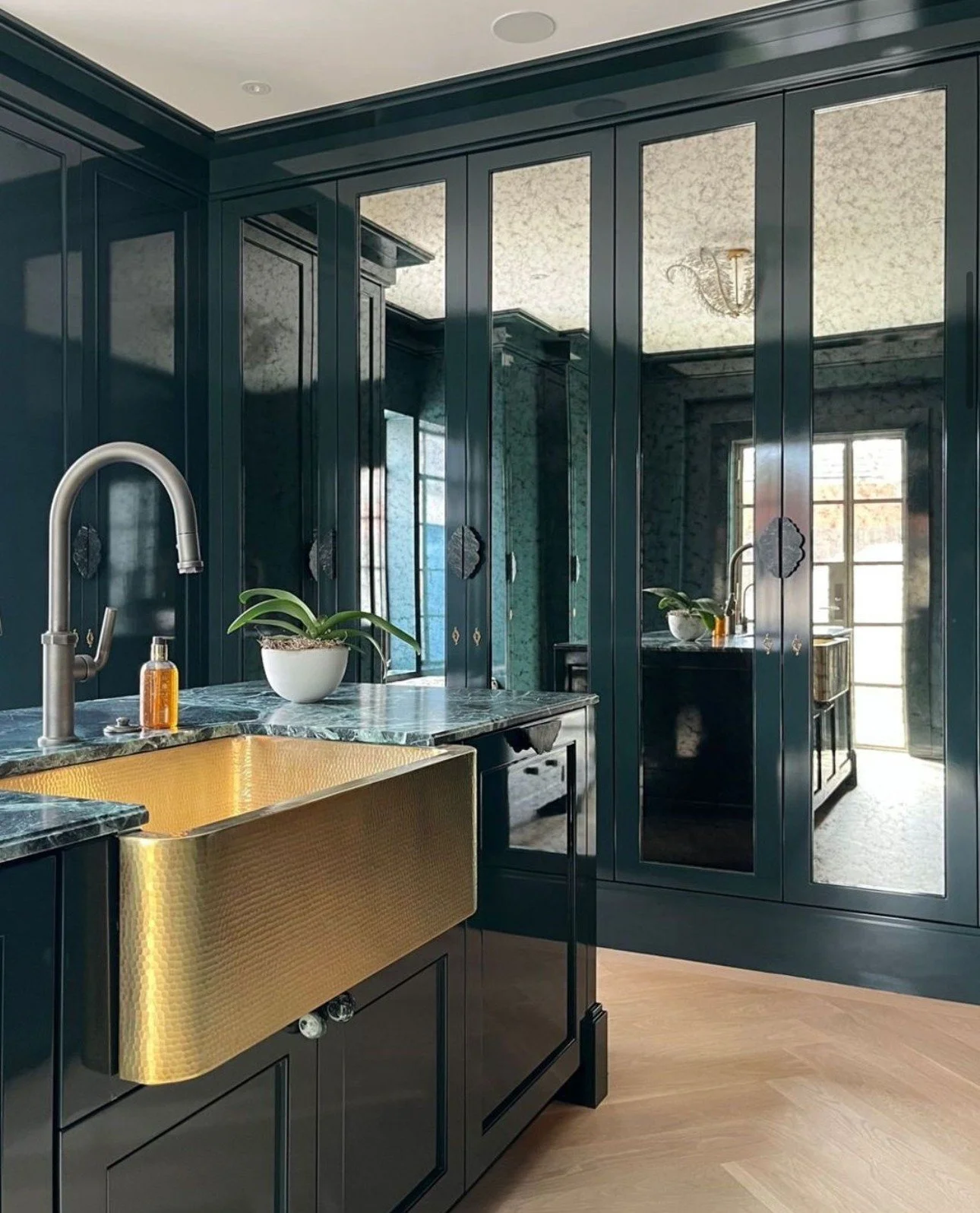
Brass brings a quiet luxury to any space. Its golden warmth sits somewhere between copper and steel — familiar but elevated. Like copper, brass develops a living patina with use, softening and deepening over time. For those who want the warmth of a metal sink with a slightly more refined, understated presence, brass is the answer.
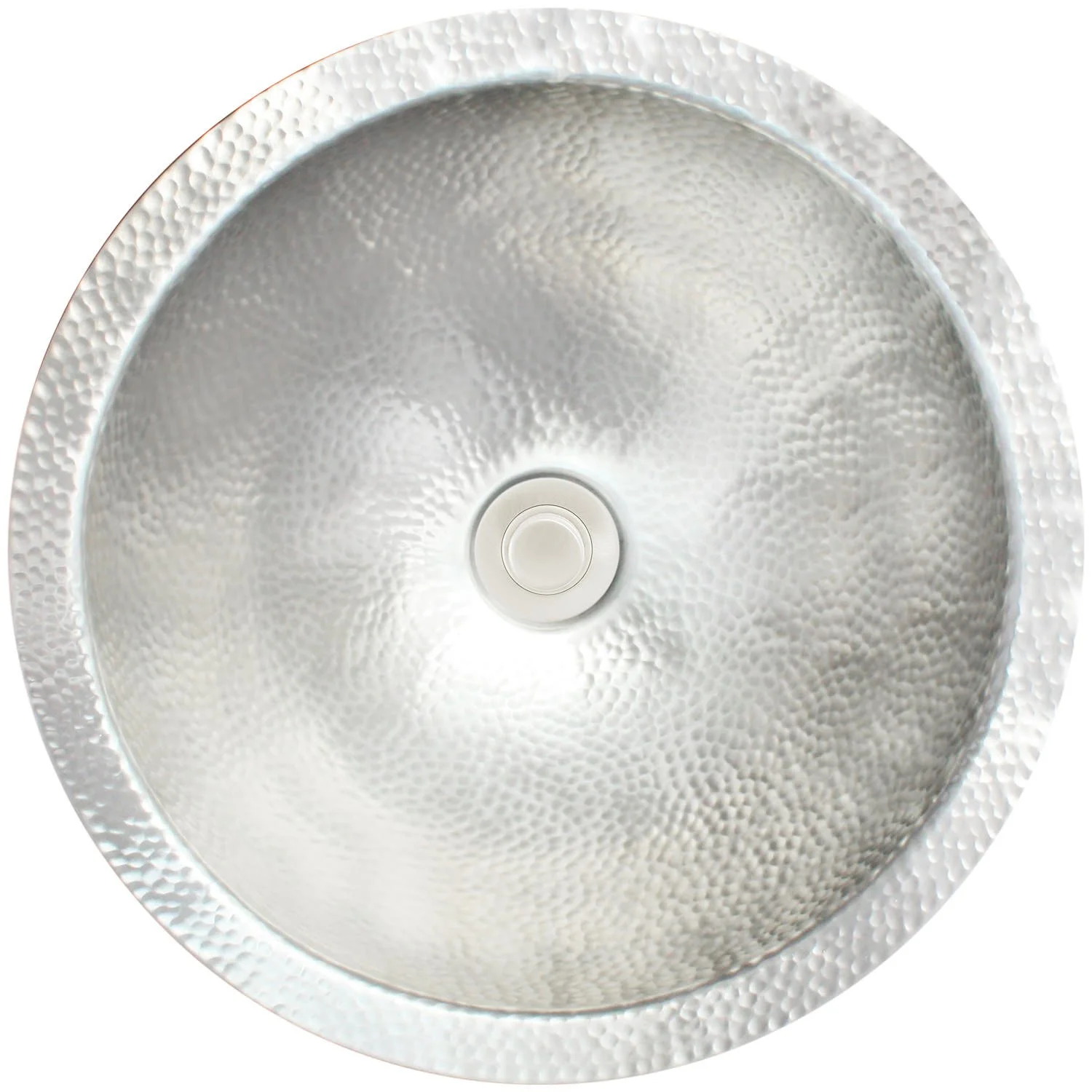
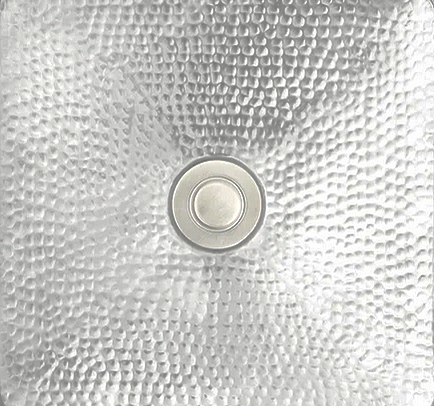
Nickel sinks begin life as copper — shaped, formed, and hammered by the same artisans using the same techniques. Once the form is complete, the copper is plated in nickel, giving the sink a cool, silvery tone that is softer and more delicate than stainless steel. The result is a finish that feels both refined and rare. It is a sink that rewards a closer look.
The Finishes
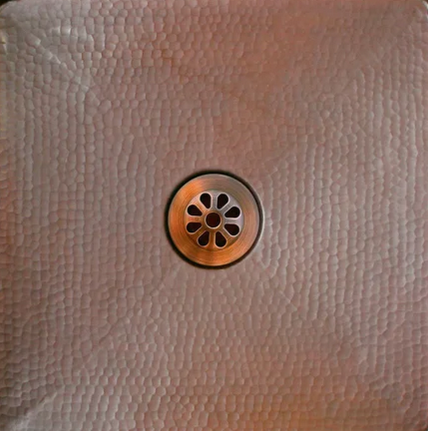
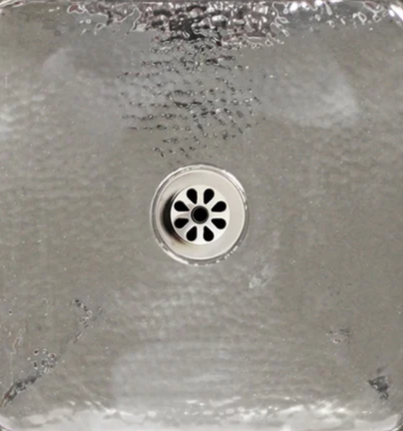
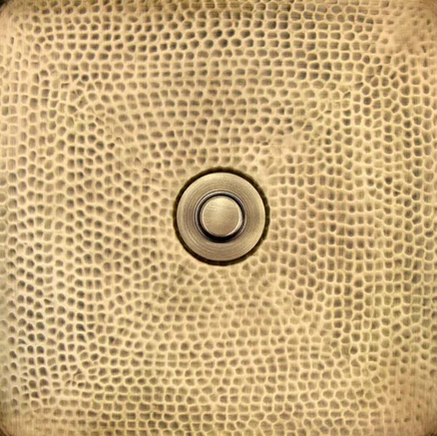
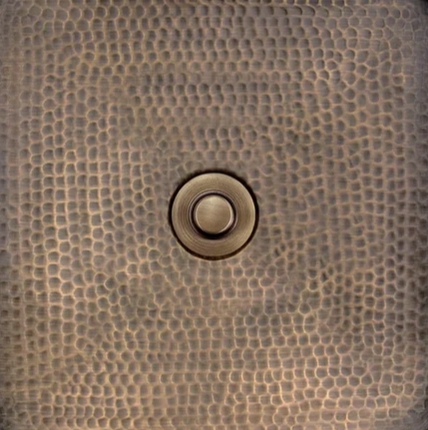
Copper: Dark Bronze — A deep, moody tone that brings drama and depth to any space. Rich and warm, it pairs beautifully with dark stone and natural wood. Weathered Copper — The look of a copper sink that has lived a long and beautiful life, applied with intention from day one. Earthy, textured, and full of character.
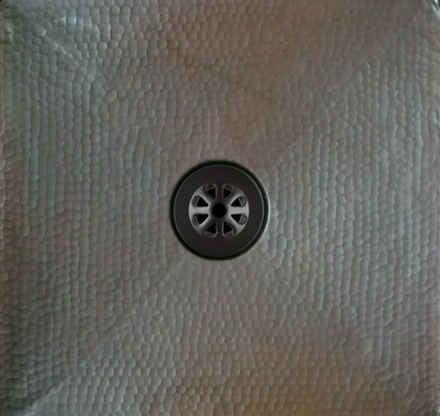
Stainless Steel: Satin — A soft, brushed finish that diffuses light evenly and feels understated and modern. Highly practical and effortlessly elegant. Polished — A mirror-bright finish that makes a statement. Bold, clean, and striking under good light.
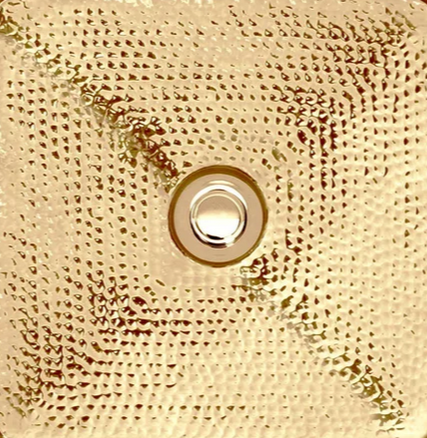
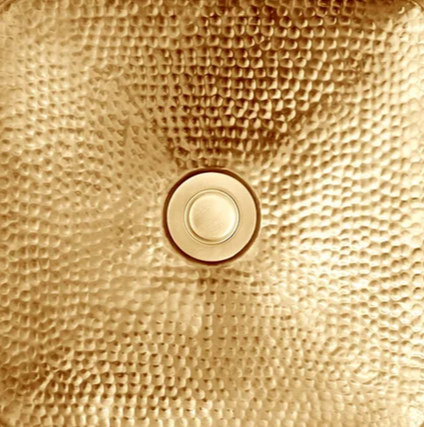
Brass: Polished Unlacquered Brass — Bright, warm, and luminous. Because it is unlacquered, it will develop a natural patina over time — getting better the longer it lives in your home. Satin Unlacquered Brass — The same living finish as polished, with a softer, more muted sheen. Warm without being flashy. Vintage Brass — A slightly aged tone that sits between new and patinated. Timeless and versatile. Antique Bronze — Dark, rich, and steeped in character. Pairs naturally with traditional and transitional interiors.
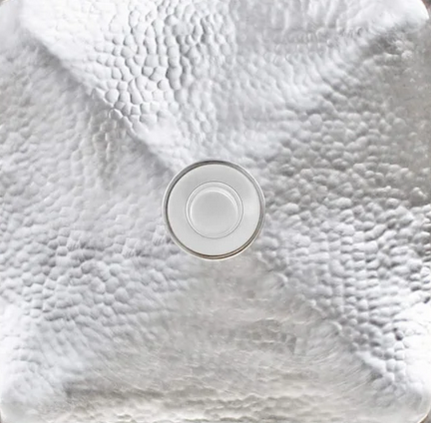
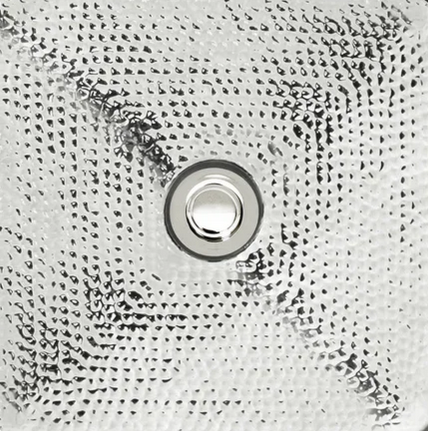
Nickel: Satin — Cool and understated, with a soft brushed quality that feels quietly luxurious. Polished — Bright and reflective, with a delicate silvery tone that catches light beautifully.
A Linkasink sink is built to last a lifetime but like any quality material it rewards a little attention. The good news is that caring for a hammered metal sink is simple. As a general rule, wipe your sink dry after use when possible, avoid leaving standing water for extended periods, and steer clear of harsh chemical cleaners, abrasive scrubbers, and anything containing bleach or ammonia.
Copper and Brass are living finishes so they are meant to evolve over time. That evolution is part of their beauty. Clean with a soft cloth and mild dish soap. Avoid acidic cleaners, citrus-based products, and abrasive pads, as these can strip the patina and damage the finish. If your sink develops spots or uneven patina, a copper or brass specific cleaner can be used sparingly to restore an even tone. Over time, the patina will deepen and settle into something uniquely your own.
Stainless Steel is the most forgiving of the metals we work with. Clean with a soft cloth, warm water, and mild soap. For stubborn spots, a non-abrasive stainless steel cleaner works well.
Nickel plated copper requires a gentle touch. Because the nickel finish is applied as a plating over copper, it is more delicate than solid metal and should be treated accordingly. Use only a soft damp cloth and mild soap — nothing abrasive, acidic, or chemical. Treated with care, a nickel sink will retain its cool, luminous finish for years to come.
How to Care for a hammered metal Sink
Where Hammered metal belongs
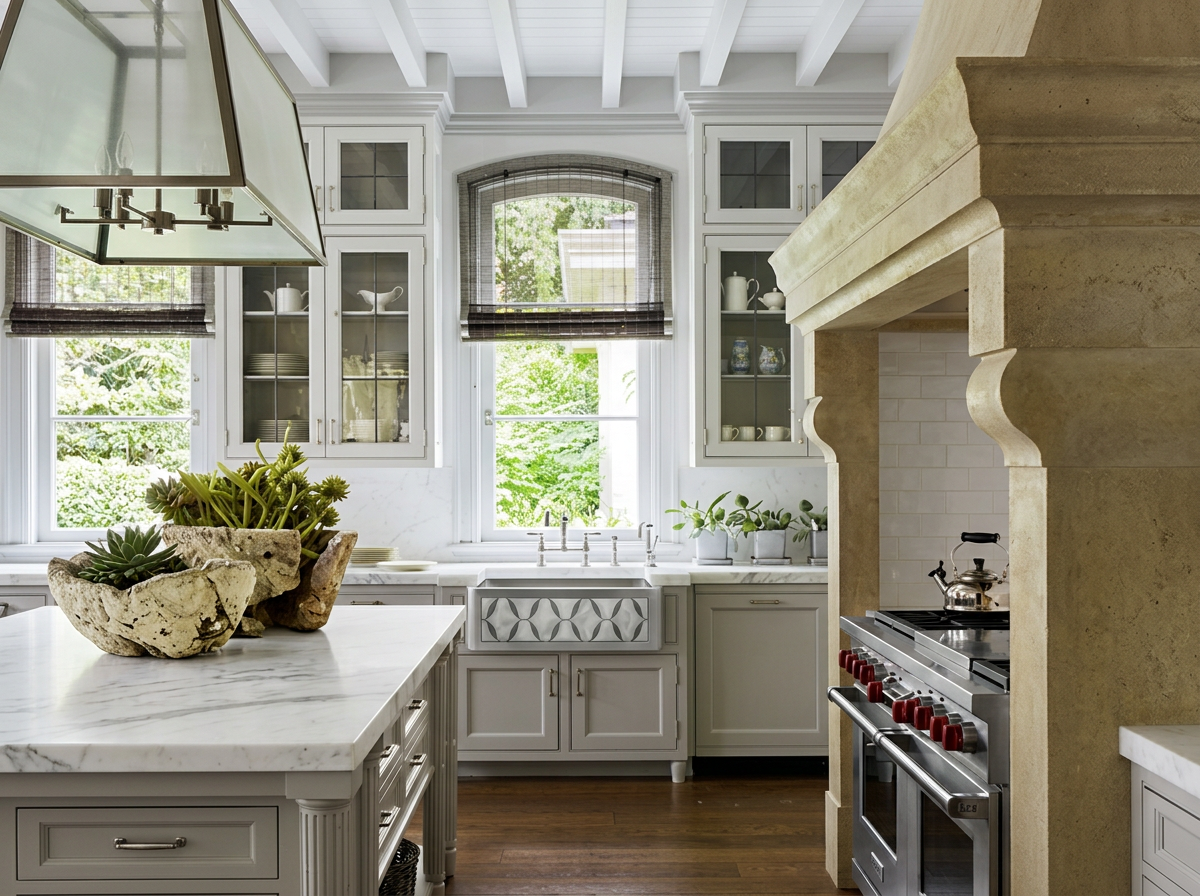
Hammered metal is one of those rare design choices that refuses to be boxed in. The texture is rooted in craft and tradition, but it reads just as naturally in a clean modern kitchen as it does in a rustic farmhouse bath. It suits the warmth of copper against natural stone, the quiet luxury of nickel in a well-appointed powder room, and the honest simplicity of stainless in a hardworking kitchen.
What makes hammered metal so versatile is what it adds to a space without taking over. It brings texture, warmth, and a sense of the handmade to rooms that might otherwise feel flat or finished. It rewards a closer look without demanding one. Whether your space is minimal or maximalist, traditional or contemporary, a hammered metal sink has a way of feeling like it was always supposed to be there.
-
Much less than a smooth surface would. The hammered texture breaks up light across the surface in a way that naturally conceals minor scratches and water spots that would be plainly visible on a flat finish. It is one of the practical advantages of the hammered process — the beauty of the texture also happens to make the sink more forgiving in daily use.
-
Every one of them. Each sink is individually shaped, formed, and hammered by skilled artisans using centuries-old techniques. The hammered texture is applied at 20 strikes per inch across the entire surface by hand — there is no machine that replicates this process. Because of this, no two Linkasink sinks are exactly alike.
-
Copper is an ideal base for plating because of its malleability and its ability to hold a hammered texture with exceptional detail. Once the copper has been shaped, formed, and hammered to our standard, a nickel plating is applied over the surface — giving the sink its cool, silvery finish while retaining all of the handcrafted texture beneath. The result is a finish that would not be achievable any other way.
-
Yes, and it is entirely intentional. Copper and brass are living finishes — they respond to their environment and evolve over time. Water, air, and everyday use all contribute to a natural patina that deepens the color and character of the metal. No two sinks will age in exactly the same way, which means the sink becomes more uniquely yours over time. This is not a defect. It is the nature of the material and one of the things that makes it special.
-
For everyday cleaning, wipe the sink down with a soft cloth and mild dish soap. Avoid harsh chemical cleaners, abrasive scrubbers, and anything containing bleach or ammonia — these can damage the surface and interfere with the finish. Dry the sink after use when possible to prevent water spot buildup. For material-specific care guidance, see our care section above.